Note: This post contains affiliate links. If you book through them, I may earn a small commission at no extra cost to you. I only recommend things I have personally used or genuinely believe in.
There are two kinds of people in this world: those who thrive on big-city energy and those who find their peace in the quiet solitude of nature. I sit comfortably in between, as in, I love me some occasional city breaks, but my heart forever seeks quieter places. Maybe it’s because I was born in one of the busiest capitals in the world; I see the charm, but I don’t really relate to it. So, when I started planning my Laos trip in July last year, I conveniently set aside only 24 hours in Vientiane.
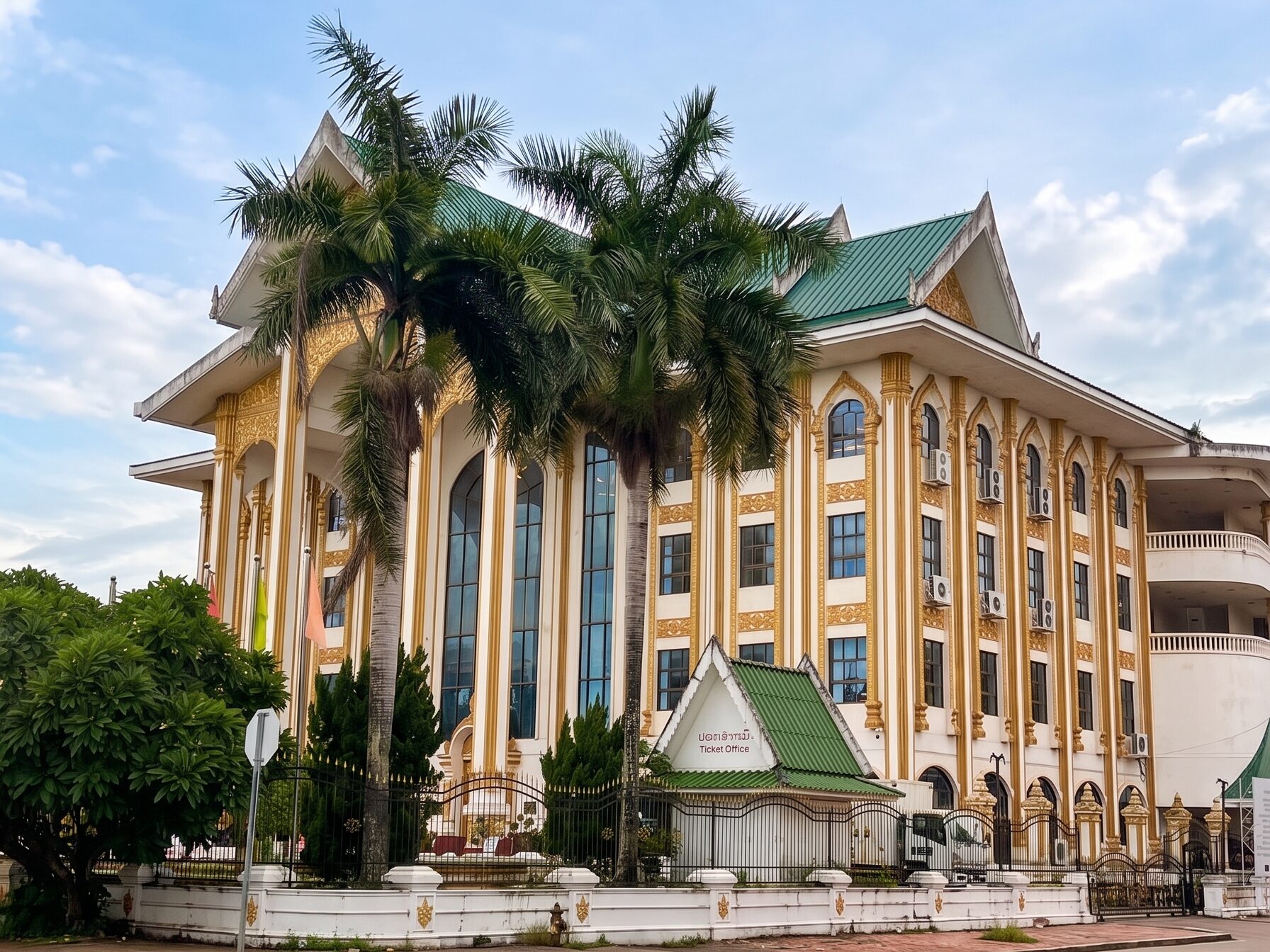
I thought that would be plenty. Vientiane had never been high on my list of cities I absolutely had to explore, and with Luang Prabang and the rest of Laos waiting for me, I was more than happy to give the capital just one day of my time.
What I didn’t expect was to find myself enjoying those 24 hours quite as much as I did. So, if you’re passing through Laos and have only one day for the capital city, I’ve got you covered.
Is One Day in Vientiane Enough?
If you ask me now, yes. One day in Vientiane is enough to get a good feel for the city, especially if, like me, you’re not someone who enjoys rushing from one attraction to another just to say you’ve been there.
Vientiane is relatively easy to explore at a relaxed pace. You can visit some of its most important temples and landmarks, eat well, wander through the older parts of the city, spend some time by the Mekong and still have enough room in your day to sit down with a coffee or simply do nothing for a while.
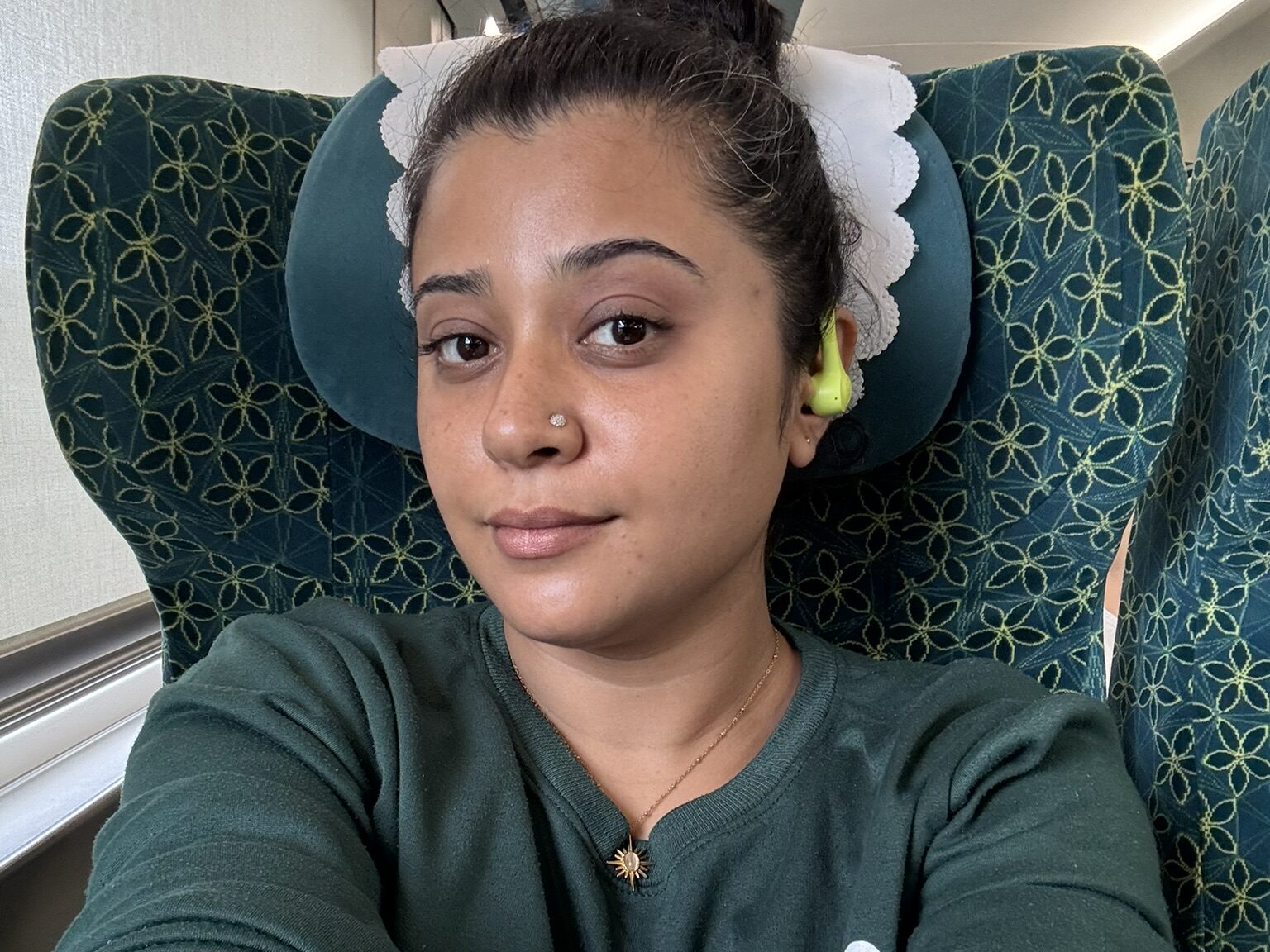
Of course, you won’t see everything in 24 hours. You could easily spend another couple of days exploring more temples, museums, markets and neighbourhoods. But I don’t think Vientiane is a city that needs to be conquered. In fact, trying to fit too much into one day would probably take away from what makes it enjoyable in the first place.
For a first visit, I’d rather see a handful of places properly, eat something delicious, watch the city slow down towards sunset and leave feeling like I actually experienced Vientiane rather than spent the day ticking boxes.
👉 Must read: Bangkok to Vientiane by Train: The Solo Traveler’s Complete Guide
24 Hours in Vientiane – At a Glance
If you are a busy traveller, meaning you juggle life and your love for travel much like me, this little section should give you a skeleton for planning your 24 hours in Vientiane without turning your day into a race against the clock.
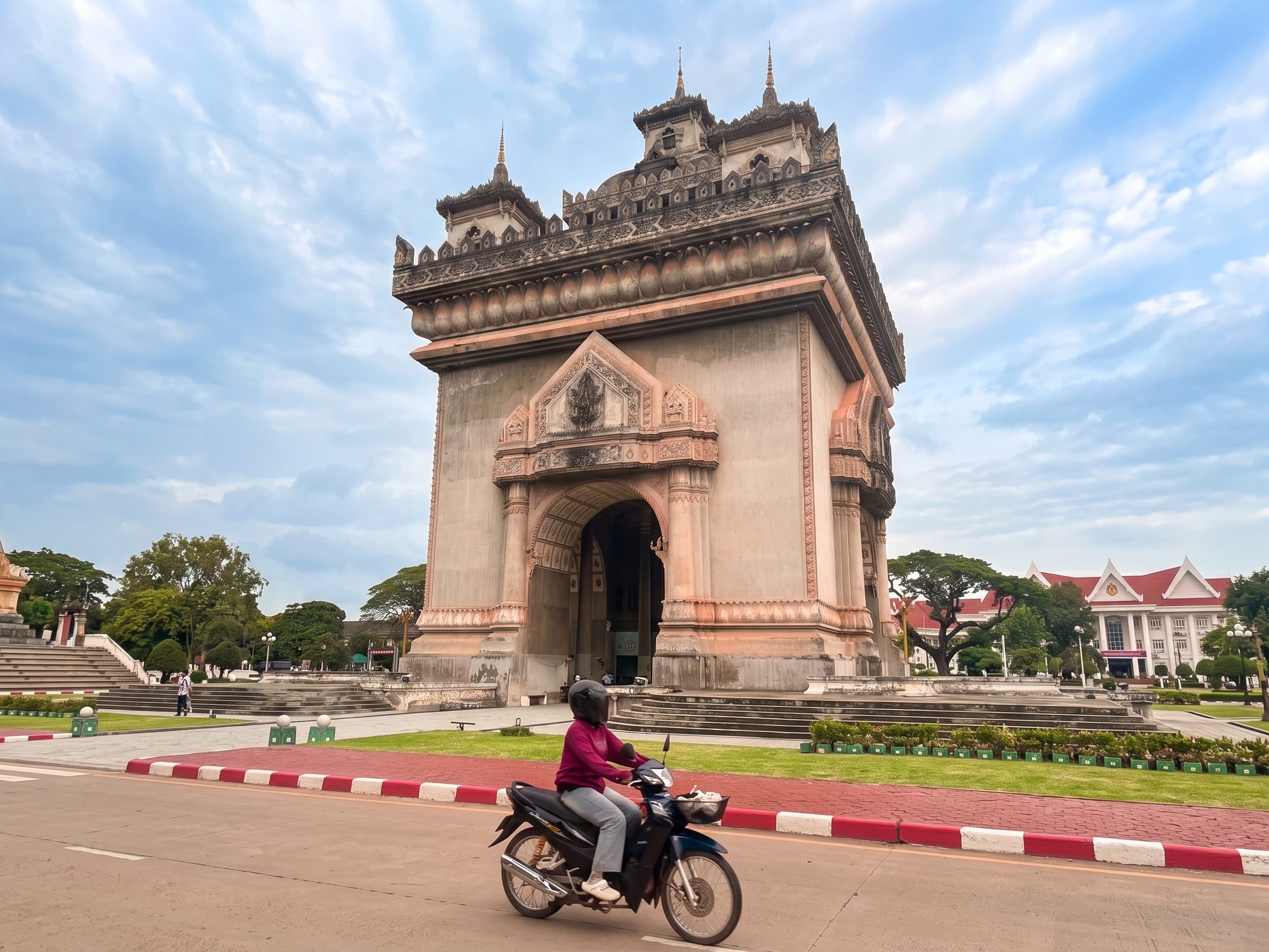
Start by checking into your accommodation and getting settled. I would recommend staying somewhere central so you have easy access to the main sights, restaurants and riverside without spending too much of your day getting around. Depending on when you arrive, take a stroll around the neighbourhood and get your bearings, or head straight to Patuxai Monument, Vientiane’s most recognisable landmark. Give yourself an hour or so to admire it and, if you wish, climb to the top for city views.
From there, you could continue to Pha That Luang, or choose one or two of the city’s temples, such as Wat Si Saket, Haw Phra Kaew or Wat Si Muang. If you’re arriving in Vientiane after several days in Luang Prabang, as I did, you may already have had your fill of temples, so don’t feel obliged to turn your day into a temple-hopping marathon. Pick the ones that genuinely interest you and leave some room for everything else.
By late afternoon, slow things down with a café stop, a leisurely meal or simply some time wandering without a particular destination. As the temperature drops, make your way towards the Mekong riverside. In the evening, you can start with the Vientiane Night Food Market if you’re hungry, then browse the main night market afterwards, or do it the other way around if you’re more interested in wandering and shopping first. There is no right order here.
Finish with a walk along the river and, if you still have some energy, seek out one of Vientiane’s smaller parks. The city has several with beautifully lit fountains after dark, and Nam Phou Park is one I happened to find by looking around on Google Maps. The following morning, leave time for something more reflective, such as the COPE Visitor Centre, followed by Wat Si Muang (if you didn’t visit already, a good coffee, and one last wander before moving on to the next part of your trip.
👉 Must read: Everything You Need to Know About Laos Visa on Arrival at Khamsavath Station
My First Actual Afternoon in Vientiane
I arrived in Vientiane by train from Luang Prabang in the afternoon, and my first impression was simply: busy! After five days in Luang Prabang, the capital felt noticeably more urban, with more traffic, movement, and general city energy. It wasn’t unpleasant, just a definite change of pace.
Getting from the LCR station into the city was fairly easy. There were several minivans and shared shuttles outside the station, so I asked around until I found one heading towards my accommodation and made my way into the city centre. I had booked a simple hostel for the night, although I had actually tried to cancel it before the trip after finding a nicer-looking stay, but the booking was non-refundable. As it turned out, I was quite happy that I couldn’t cancel because the hostel was clean, quiet, peaceful and very conveniently located.
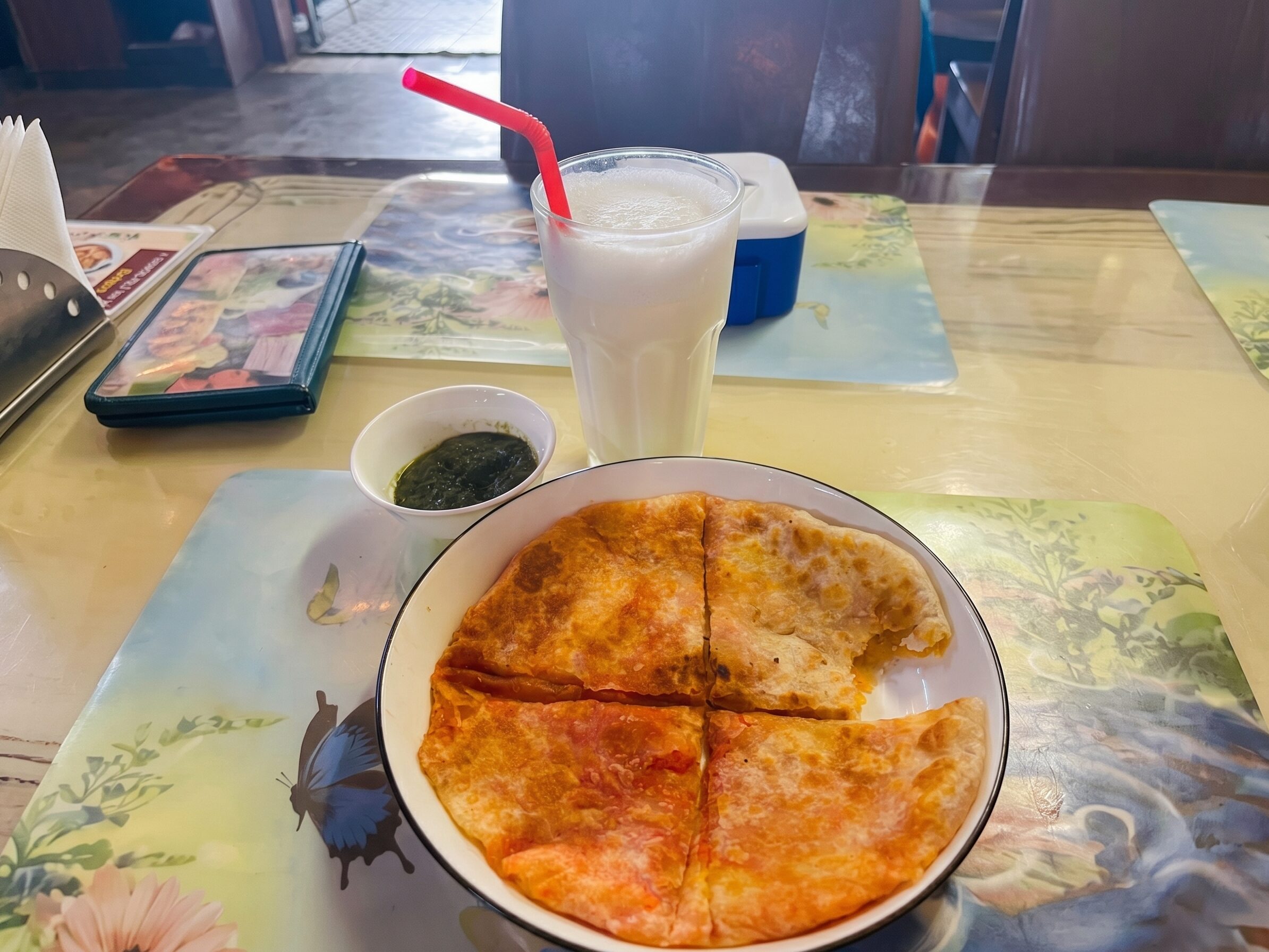
After checking in, I headed out to find some lunch and ended up at BaBa Restaurant, where I had paratha with dahi and achaar. Once I’d eaten, I went for a walk around the neighbourhood to get my bearings, without any particular sightseeing plan. That’s when I stumbled across That Dam.
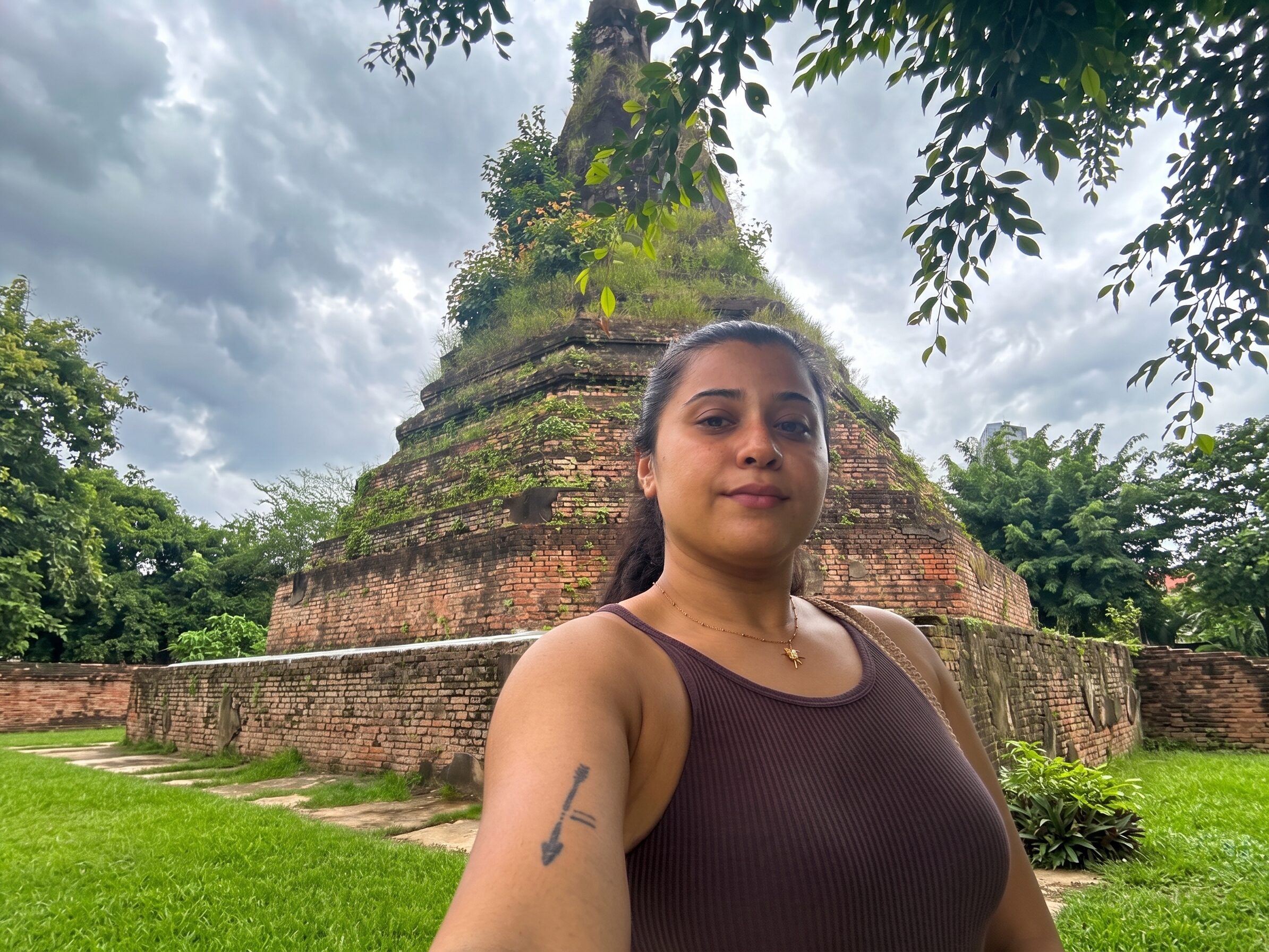
I had no idea what the dark stupa sitting in the middle of the city was, so I looked it up and discovered that I’d accidentally found one of Vientiane’s better-known landmarks. That Dam, or the Black Stupa, is believed to have once been covered in gold, while local legend says that a seven-headed naga protected the stupa and the city. What struck me, though, was how unusual it felt to see such a striking religious monument sitting so casually in the middle of the everyday city landscape.
I didn’t try to pack anything else into the afternoon. I had plans to meet some people from my hostel that evening, so I headed back to rest and freshen up before we set out together to explore Vientiane after dark.
Vientiane After Dark: Night Markets, Street Food & the Mekong
After a little rest and a quick freshen-up at the hostel, I met up with the people I’d been sharing the dorm with, as we’d planned earlier. We set off on foot, taking our time and simply enjoying the evening streets before making our way towards the Mekong and the night market.
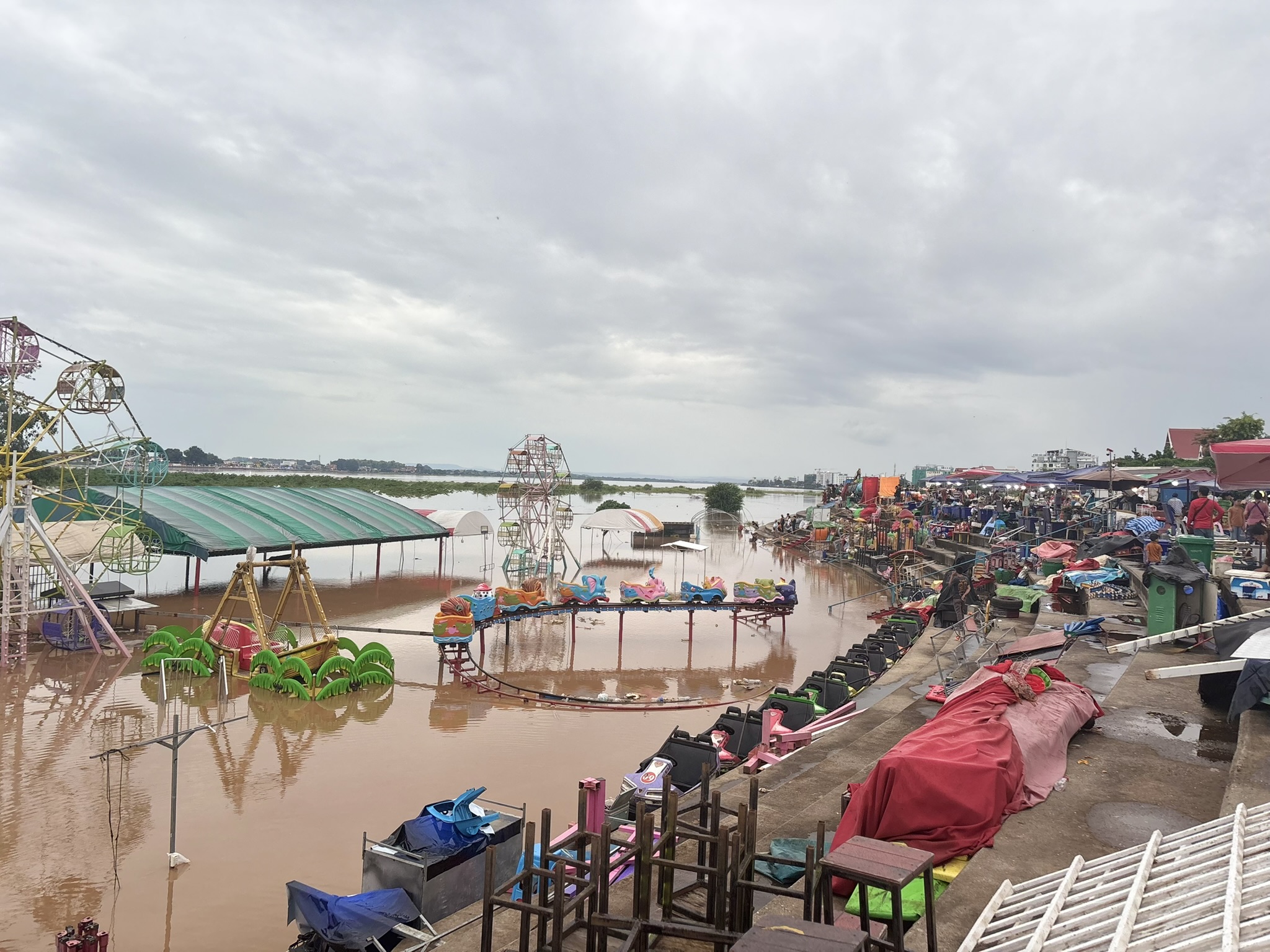
It was around 5 PM when we reached the riverside, so none of us were hungry yet. There is also an amusement park beside the Mekong near the night market, but unfortunately, my visit happened right in the middle of Typhoon Wipha, and much of it was submerged in water. The flooded rides and empty surroundings gave the whole place a slightly eerie, almost horror-movie feel, although I did at least get a glimpse of Thailand across the river.
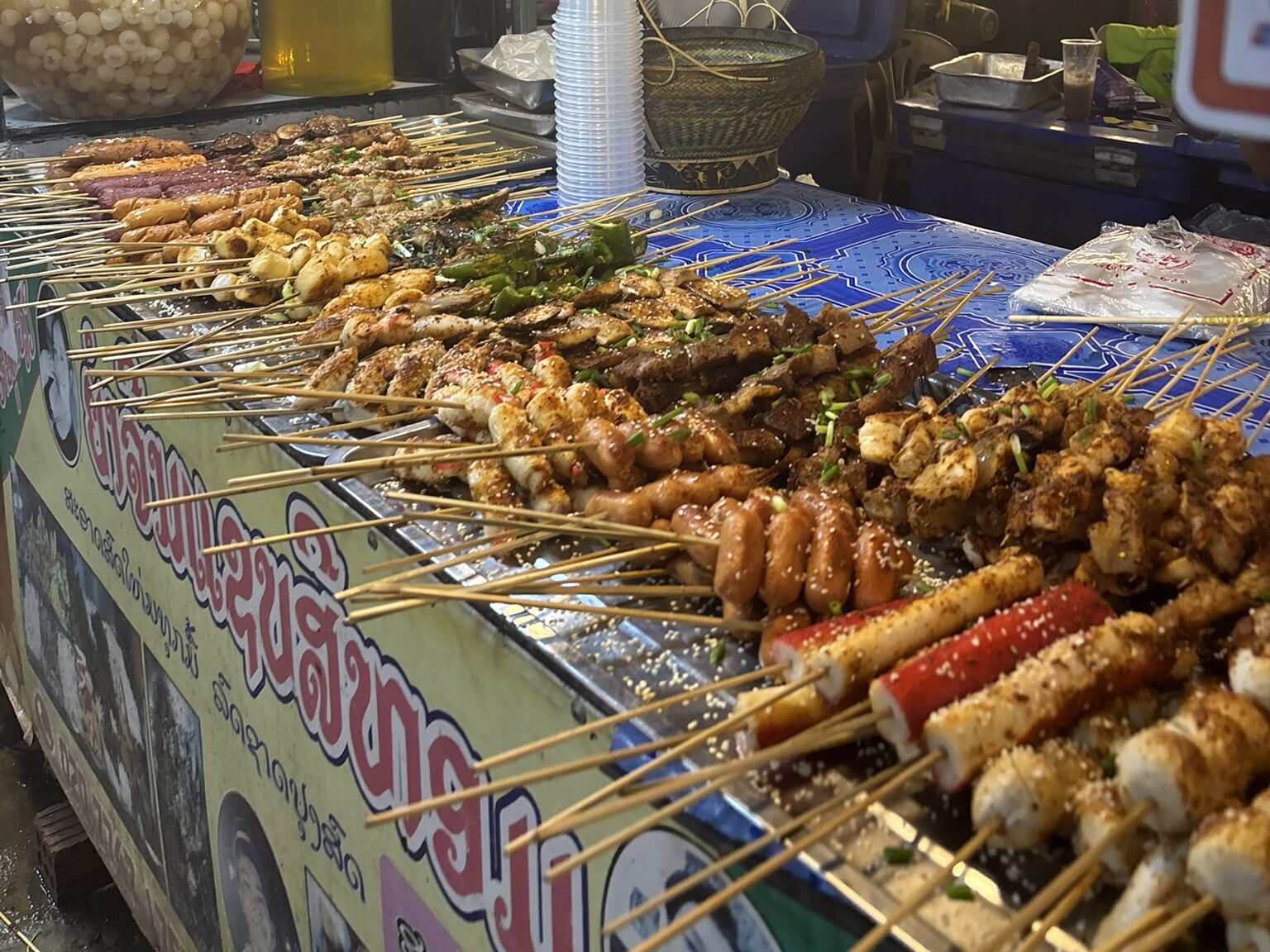
We eventually made our way to the Vientiane Night Market, which I found quite nice and affordable. Having lived in Thailand for almost four years, I can say I’ve definitely seen bigger and better night markets, but this one had its own charm. I also liked that nobody was constantly trying to get you to buy something, so you could browse peacefully, take your time, and simply see what was on offer.
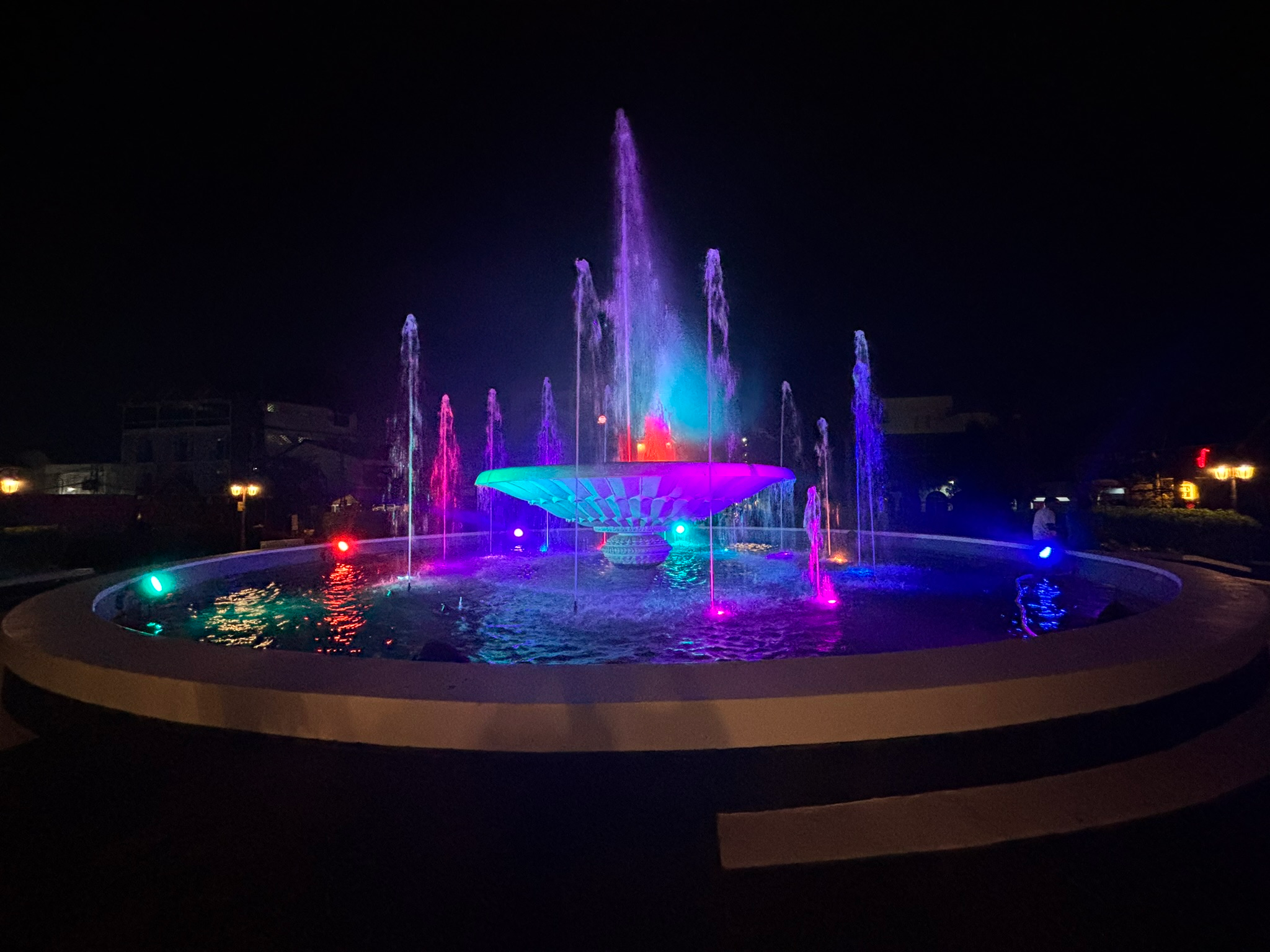
Once we were ready for dinner, we headed to the night food market to grab something to eat. After dinner, we wandered around some more and used Google Maps to see what was nearby. That’s how we found one of Vientiane’s small parks, which had a lit-up fountain and was almost completely empty apart from a few locals.
It turned out to be a surprisingly pleasant way to end the evening. We took a short stroll around, then headed back to the hostel and called it a night.
A Morning at the COPE Visitor Centre
The next morning started slowly at the hostel. I had the complimentary breakfast, which came with a nice coffee, and took my time getting ready rather than rushing out first thing. With a few hours left before I had to leave Vientiane, I headed to the COPE Visitor Centre, which a friend had specifically recommended to me.
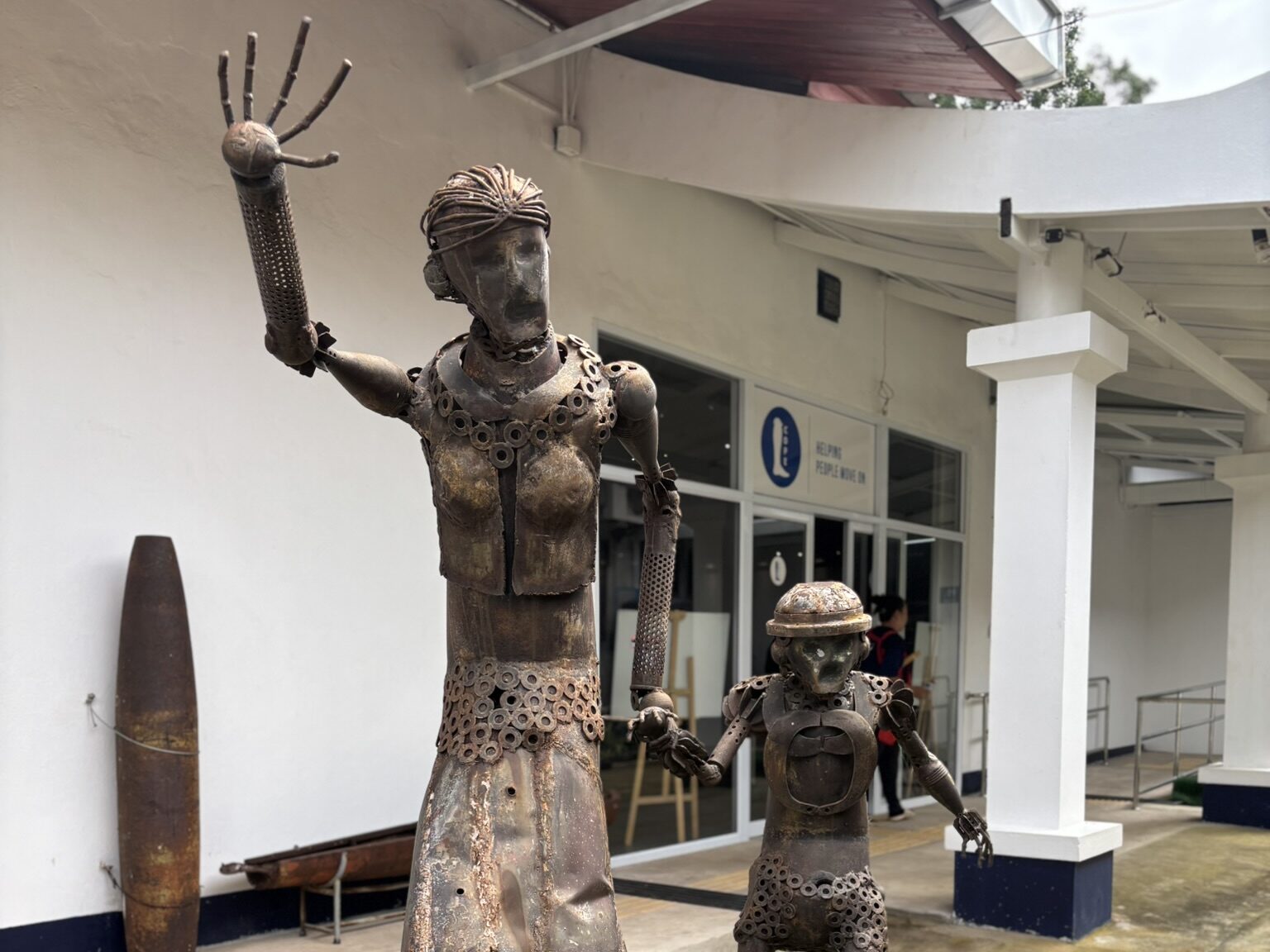
COPE focuses on the impact of unexploded ordnance left behind from the wars in Laos, as well as the work being done to provide prosthetics, rehabilitation and support to people affected by them. This is not a light sightseeing stop, and I would not recommend it if you are looking for something easy or cheerful to fill an hour of your morning. Some of the things I saw and learned there were genuinely difficult to process, particularly knowing that the consequences of what happened decades ago are still affecting people’s lives today.
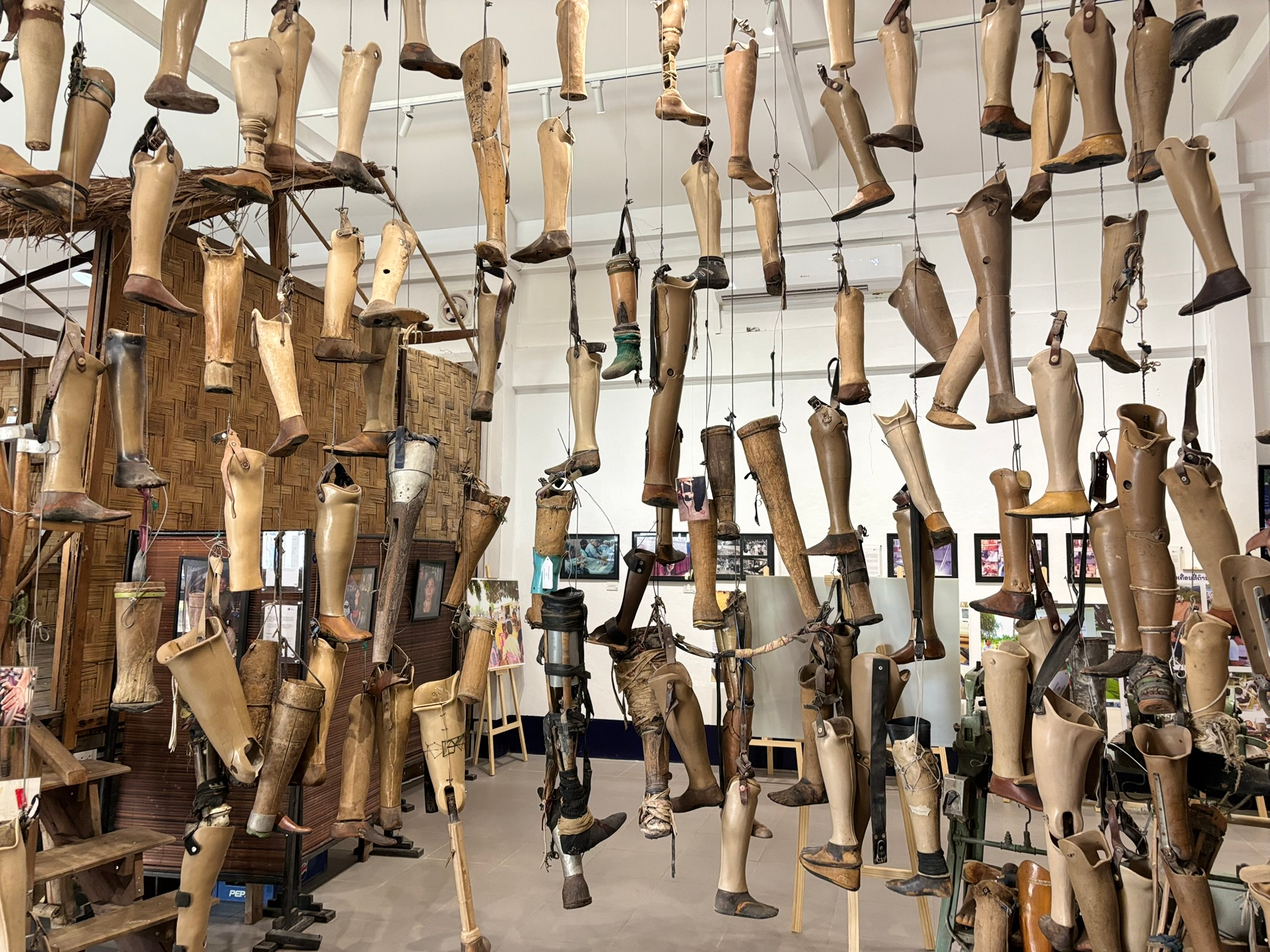
I am deliberately not going to try to summarise the entire experience here because I don’t think I could do it justice in a few paragraphs. In fact, the more I think about it, the more I feel like the COPE Visitor Centre deserves a dedicated post of its own, where I can properly share what I saw, learned and felt without squeezing it into an already packed Vientiane itinerary.
For this trip, though, I was very glad I made the time to visit. It added a completely different dimension to my understanding of Laos, beyond the temples, markets and pretty riverside towns that naturally make up so much of a first-time visitor’s experience.
👉 Must read: Discover the Magic of Slow Travel: 7 Days in Laos
Wat Si Muang, Coffee & A Slow Goodbye
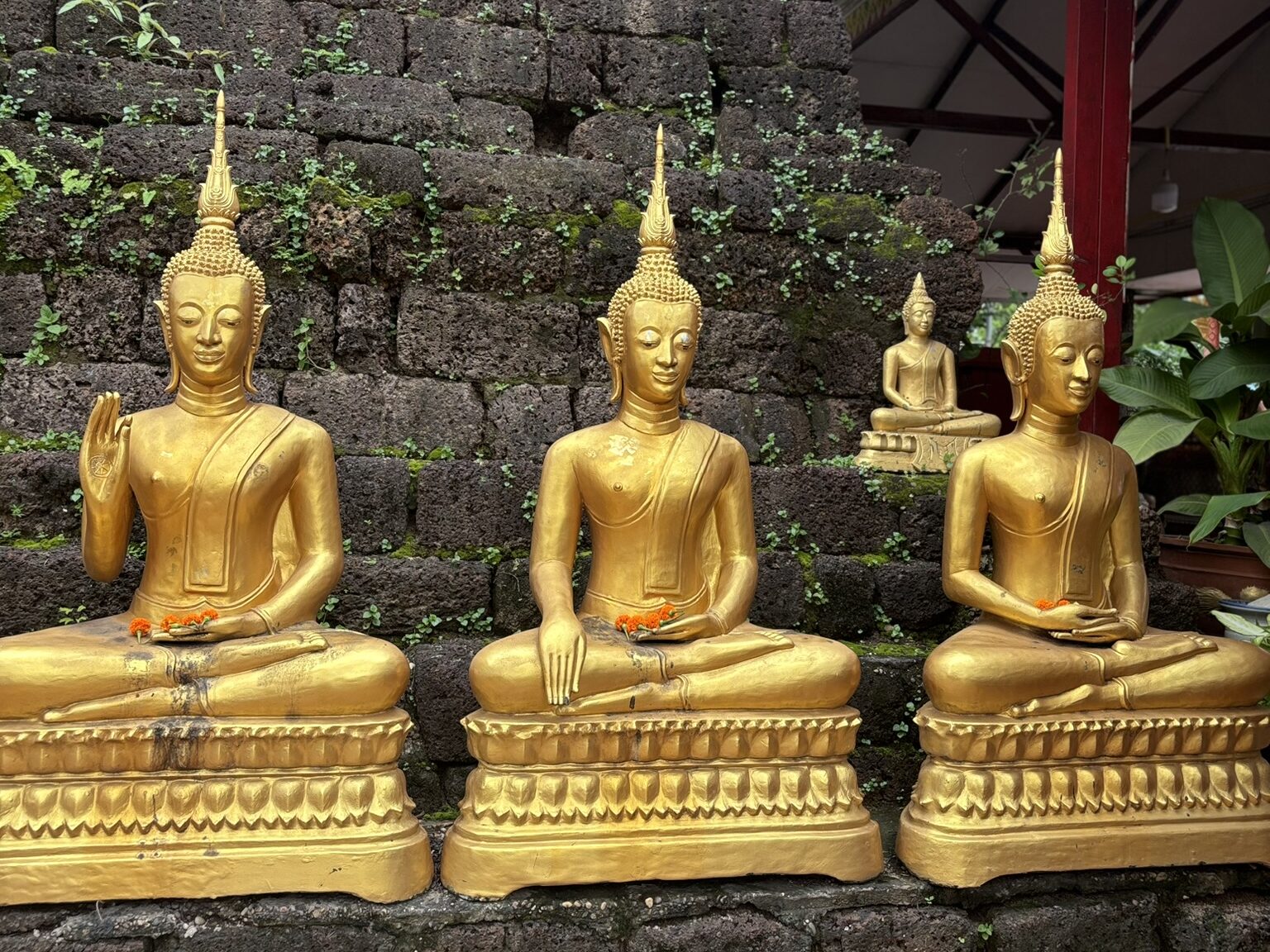
After leaving the COPE Visitor Centre, I continued exploring Vientiane at a slower pace and made my way to Wat Si Muang. After five days of temples in Luang Prabang, I was definitely experiencing some temple fatigue, so I wasn’t looking to spend the morning hopping from one temple to another. Wat Si Muang was still worth seeing, though, and I found it noticeably more active and lived-in than many of the quieter temples I had visited in Luang Prabang, with locals coming and going throughout the day.
From there, I stopped at Kung’s Cafe Lao, a small café I had seen recommended online. It was probably the only proper “YouTube checklist” stop I made during my Laos trip, but I’m glad I did. It was a simple place to pause for a coffee and take a breather before the rest of my journey.
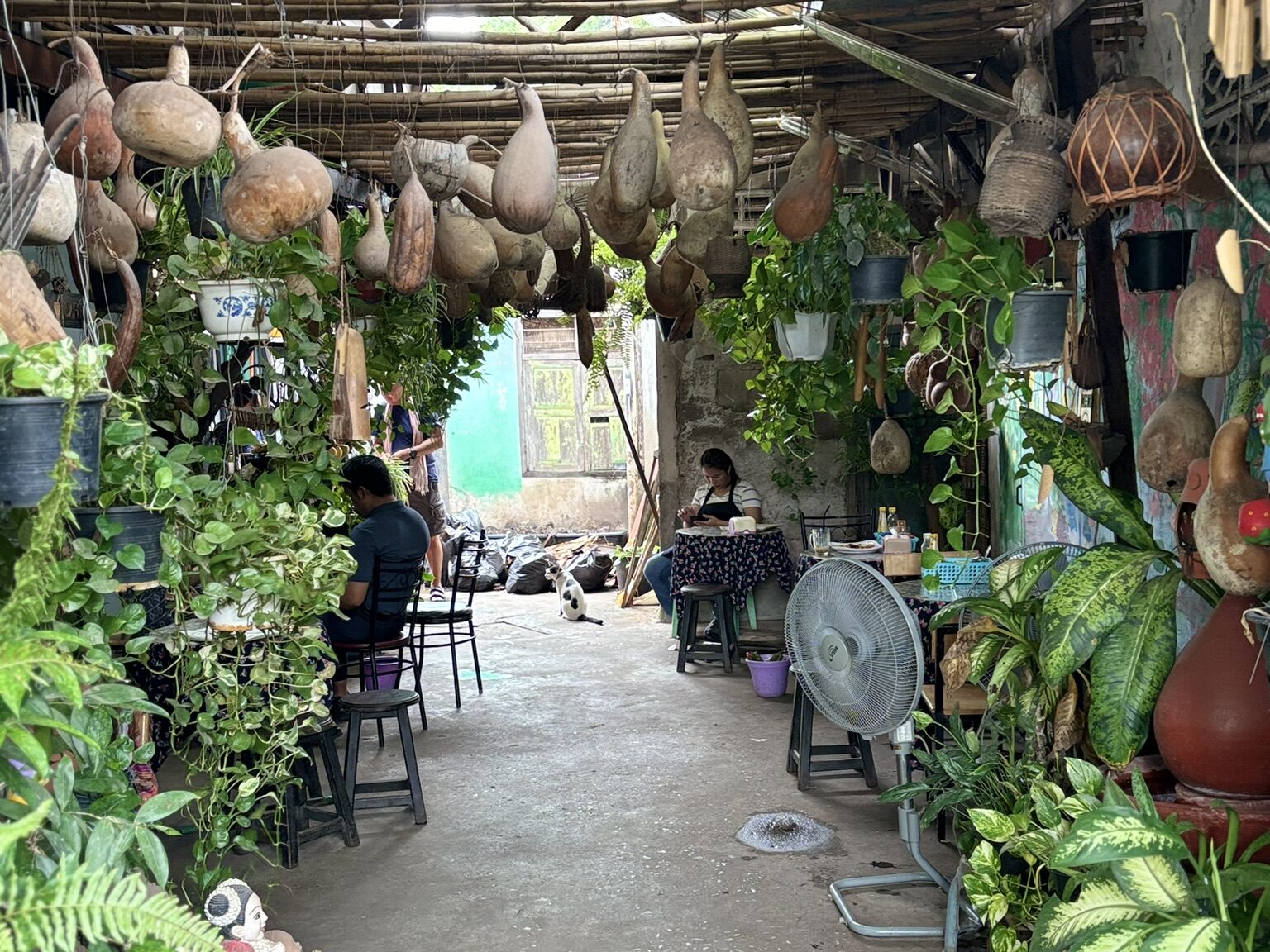
With that, my 24 hours in Vientiane was more or less done. I hadn’t managed to see every major landmark in the city, nor did I particularly want to. What I did get was a taste of Vientiane that included its everyday streets, food, markets, history and a few unexpected discoveries along the way, which felt like a pretty good introduction to the Lao capital.
Frequently Asked Questions About Spending 24 Hours in Vientiane
Is Vientiane easy to get around without a scooter?
Yes. If you stay centrally, many of the places in this itinerary are walkable. For longer distances, you can download LOCA for bikes and taxis, and KOKKOK Move (only in Vientiane) for electric tuk-tuks.
Where should I stay for one night in Vientiane?
Stay somewhere in or close to the city centre. If you are on a budget and don’t mind staying at a hostel, I highly recommend House of Jars. It’s not a party hostel. You will have peace and quiet as well as proper privacy, as each bunk comes with its own privacy curtain.
How much money do I need for 24 hours in Vientiane?
Vientiane can be quite affordable, particularly if you eat at local restaurants and markets and choose a simple central hostel or guesthouse. Your biggest expense will usually be accommodation, while food, local transport and sightseeing can be kept relatively modest. That being said, I spent about 2,000 INR (including a night at the hostel, meals, bike taxis, and some minor souvenir shopping).
What is the best time of year to visit Vientiane?
The cooler, drier months from roughly November to February are generally the most comfortable for exploring on foot. The hotter months can make walking around during the afternoon tiring, while the rainy season can bring sudden heavy showers, as I discovered during my own visit.
Can I use cards in Vientiane?
Cards are accepted at some hotels, restaurants and larger businesses, but I wouldn’t rely on them exclusively. Keep some Lao kip with you for street food, markets, smaller cafés and local transport. It’s worth having cash available before heading out for the day.
What should I wear when visiting temples in Vientiane?
Dress respectfully when visiting temples, with your shoulders and knees covered. Carrying a light scarf or shawl is an easy way to cover up if you’re wearing something more casual while exploring the city.
Is Vientiane safe for solo female travellers?
I found Vientiane comfortable to explore during my short stay, including walking around the central areas and visiting the markets. As anywhere, use normal precautions, especially after dark, keep an eye on your belongings, and use reputable transport when travelling farther afield.
How can I get a Laos Visa on Arrival if I am taking the train from Thailand?
If you are taking the overnight sleeper train from Bangkok, Thailand to Vientiane, Laos, you can get your visa on arrival very smoothly at Vientiane Kamsavath Station. I wrote a full guide on how to do so here.
A Quick Note Before You Go
I used to think that if I didn’t have enough time to properly explore a place, there was little point in going at all. These days, I’m much less rigid about that. Sometimes you have five days, sometimes you have 24 hours, and sometimes a place you expected very little from ends up surprising you.
Vientiane was never the main event of my Laos trip. I had five days in Luang Prabang, other places I wanted to see and a train ticket that meant I was always going to have a limited amount of time in the capital. But I didn’t feel the need to cram those 24 hours with every major attraction, and some of my favourite moments ended up being the simplest ones – walking around the city, eating at the night market, stumbling across That Dam and spending an evening with people I’d just met.
If you’re planning a trip through Laos, you might also enjoy my Laos Travel Collection, particularly if you’re looking for a slower way to experience the country rather than rushing through every major attraction. I also have plenty of practical travel guides and personal reflections from my time travelling through places like Uzbekistan and Thailand, where I’ve learned that some of my favourite travel memories have come from the days when I had the least structured plans.
If you’d like new posts delivered straight to your inbox, my newsletter goes out every Tuesday.
I’m also on Instagram, where I share the little moments that don’t always make it into the blog, from quiet mornings and local cafés to unexpected discoveries and the everyday observations that happen somewhere between the big travel experiences.
And now I’d love to hear from you. Have you ever visited somewhere expecting very little and ended up enjoying it far more than you thought you would? Tell me about it in the comments. And if you know someone planning a Laos trip who has Vientiane on their route, send this article their way.