
Note: This post contains affiliate links. If you book through them, I may earn a small commission at no extra cost to you. I only recommend things I have personally used or genuinely believe in.
Before booking my tickets, I had a lot of questions about how the premier Afrosiyob train in Uzbekistan actually functions for an independent traveller. My mental picture of navigating overland transit through Central Asia was a somewhat chaotic montage of dusty bus stations, deep language barriers, and stressful negotiations with aggressive drivers. I fully expected transit days to be something I simply had to endure to reach the beautiful architecture on the other side.
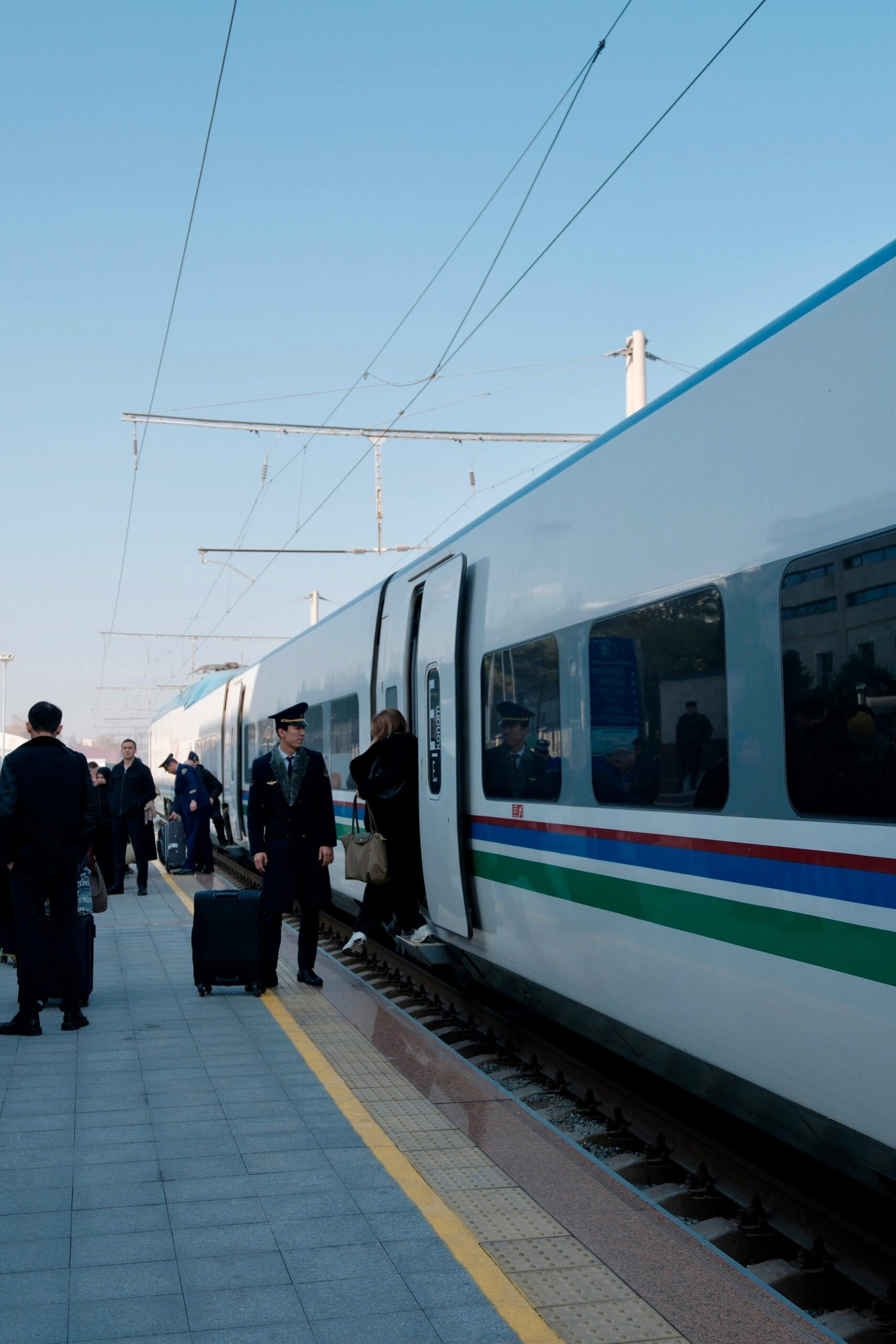
Instead, I spent my journeys gliding across the desert at 250 kilometres per hour, sipping hot green tea from a porcelain cup while watching the sun set over the plains.
The high-speed rail network is arguably the most civilised, stress-free way to move between the historic hubs of the Silk Road. For an independent traveller over 35 who values a reliable schedule and a comfortable seat over backpacker chaos, the country’s rail system is a revelation. Independent travel here is completely manageable, provided you understand how the booking windows work.
Here is everything you need to know about the reality of taking the trains in Uzbekistan, minus the technical guidebook fluff.
👉 Must read: Mosaics and Magic in Samarkand, Uzbekistan
Uzbekistan Train Travel: Quick FAQs
What is the Afrosiyob train?
It is a high-speed electric talisman train manufactured in Spain that connects Tashkent, Samarkand, and Bukhara. It looks and feels exactly like a European bullet train but operates at a fraction of the cost.
Is Uzbekistan train travel easy for foreigners?
Extremely easy. The main stations are modern, well-signposted, and highly organised. Ticket checkers and security personnel are used to tourists, and the onboard announcements are made in Uzbek, Russian, and English.
How do I book tickets for the high-speed trains?
You can book online through the official Uzbekistan railway website or their mobile app. The process is straightforward, but the real challenge is timing. Tickets sell out incredibly quickly, often within minutes of the booking window opening. Alternatively, you can also book the trains via third-party apps such as 12Go Asia.
When does the booking window open?
Officially, tickets go on sale 45 days before the departure date. If you are planning a solo travel Uzbekistan train itinerary, you need to mark this date on your calendar and buy your tickets the moment they become available.
What happens if the high-speed trains are completely sold out?
Do not panic. The country also runs older Soviet-era trains like the Sharq or the Soviet night trains. They take a few hours longer and lack the sleek design of the bullet train, but they are exceptionally affordable, clean, and offer a wonderful look into local life.
Is it safe for solo female travellers?
Incredibly safe. Stations are heavily monitored, security checks are mandatory before entering, and the carriages are bright and open. You will mostly find local families, business commuters, and other independent travellers on board.
Booking the Afrosiyob Train Tickets
To my genuine surprise, booking the Afrosiyob train tickets turned out to be significantly easier than booking Indian Railways.
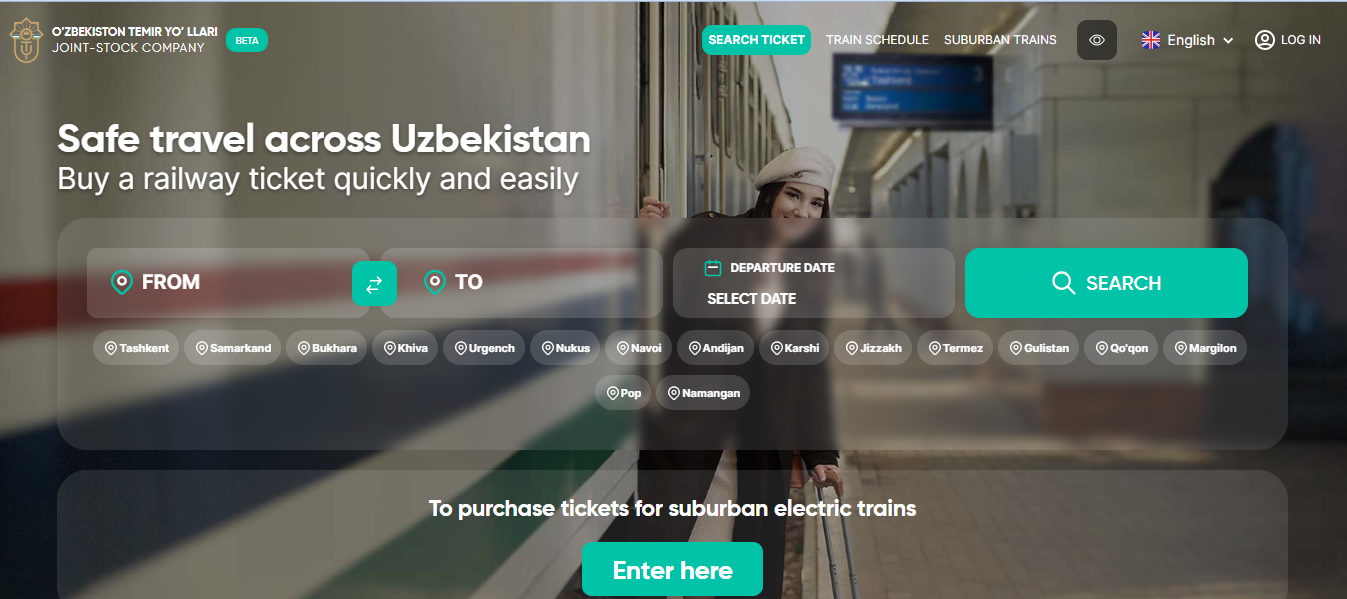
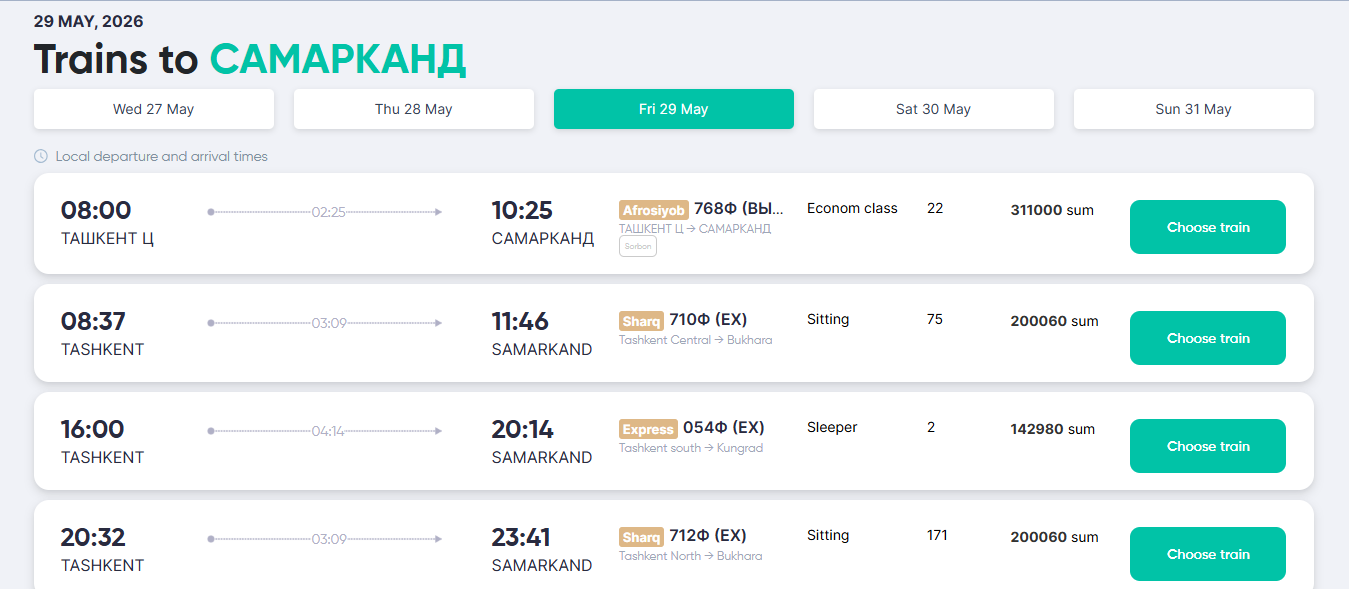
All I had to do was go to the official Uzbekistan Railways website, enter my departure city, destination, and travel date, and the system immediately showed all available trains for that route. Not just the high-speed Afrosiyob trains, but also the slower Sharq trains, passenger trains, and overnight options.
The website itself was clean, easy to navigate, and refreshingly functional. Which, as someone raised on the spiritual endurance test that is IRCTC during Tatkal hours, felt almost suspicious.
For the Afrosiyob trains, you can choose between three seating classes:
- Economy Class – 176 seats, 311,000 Som one-way | ₹2,500approx.
- Business Class – 24 seats, 455,000 Som one-way | ₹3,600 approx.
- VIP Class – 22 seats, 709,000 Som one-way | ₹5,600 approx.
Quick Steps to Book the Train
- Open the official Uzbekistan Railways website on your browser OR download the “Uzrailways Tickets” app in your Apple/Android phone.
- Choose your preferred language as “English” (unless you read Russian/Uzbek).
- Next, click on the three lines on the top left and register/log in to the app
- Once you are logged in, tap the three lines again and click “My Companions.”
- Enter your information as well as any accompanying travellers under this section (ensure that the information entered here exactly matches that of your passport).
- Come back to the main page and enter your Departure Station, Arrival Station, and Departure Date, and click “Find.”
- From the list of trains in the next window, “Select” the one that best meets your time and budget.
- On the next screen, you will see the available seating/class type and their fare
- Once you choose the class, you will be taken to the screen where you can select your preferred seat (you can only book 4 seats at a time).
- Click “Continue” and tap on “Choose from the list of my companions” to select the travellers.
- Click “Continue” and quickly confirm the information on the next screen. Don’t forget to click on “Accept License and Agreement” and “Sent ticket to email”.
- Once you click on “Sent ticket to email”, it will prompt you to enter your email.
- Next, click on the total payment amount and choose “Physical Card.”
- Finally, enter your card details and continue (ensure that your card has international online transactions beforehand).
- And, that’s it!
I personally travelled in Economy Class and found it more than comfortable enough for the relatively short journeys between cities. The seats were spacious, the carriages were clean, and at no point did I feel tempted to upgrade unless I suddenly developed the income level of a minor diplomat.
The slower trains are usually cheaper and can still be a perfectly good option, especially if the Afrosiyob tickets are sold out. They simply take an extra hour or two, depending on the route.
Now, the one thing you absolutely do need to understand is the booking window.
Tickets officially become available 45 days before departure, and during peak travel periods, they can disappear quickly. That said, I travelled in early April during shoulder season and had no real trouble finding tickets online. If your plans are relatively fixed, I would simply recommend booking as early as possible and then forgetting about it instead of repeatedly checking availability and slowly manufacturing unnecessary stress for yourself.
👉 Must read: What Uzbekistan Really Cost Me
What the Train Stations Looked Like
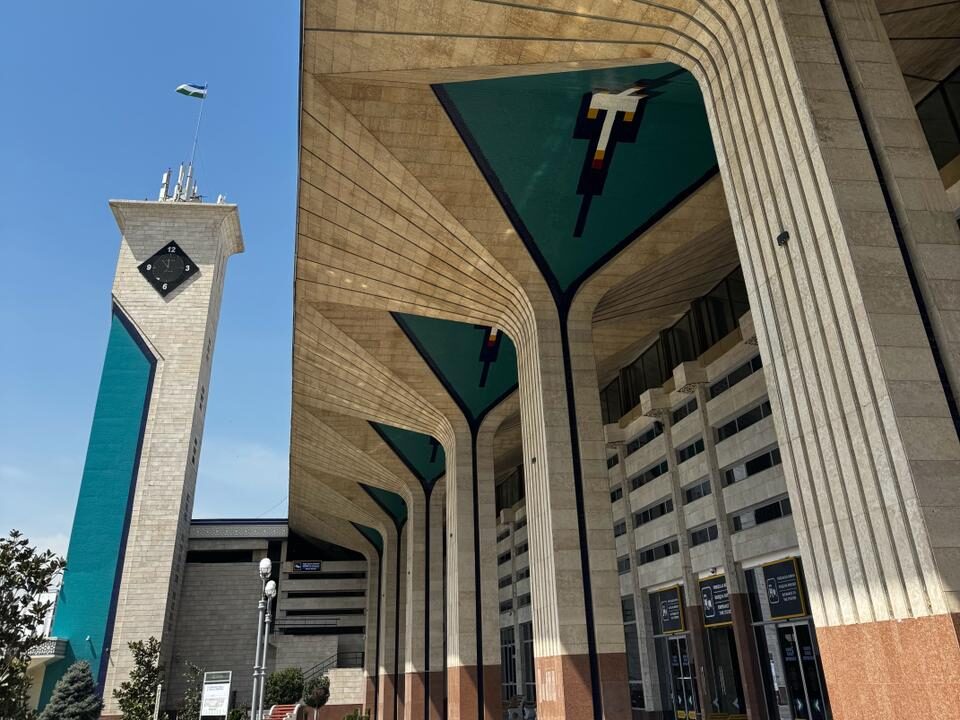
The train stations in Uzbekistan were probably one of the biggest surprises of the entire trip for me.
For reasons I still cannot fully explain, I had mentally prepared myself for crowded halls, confusing signage, and the kind of logistical chaos that makes you question every life choice leading up to a journey. Instead, most of the stations felt calm, orderly, and far more organised than I expected.
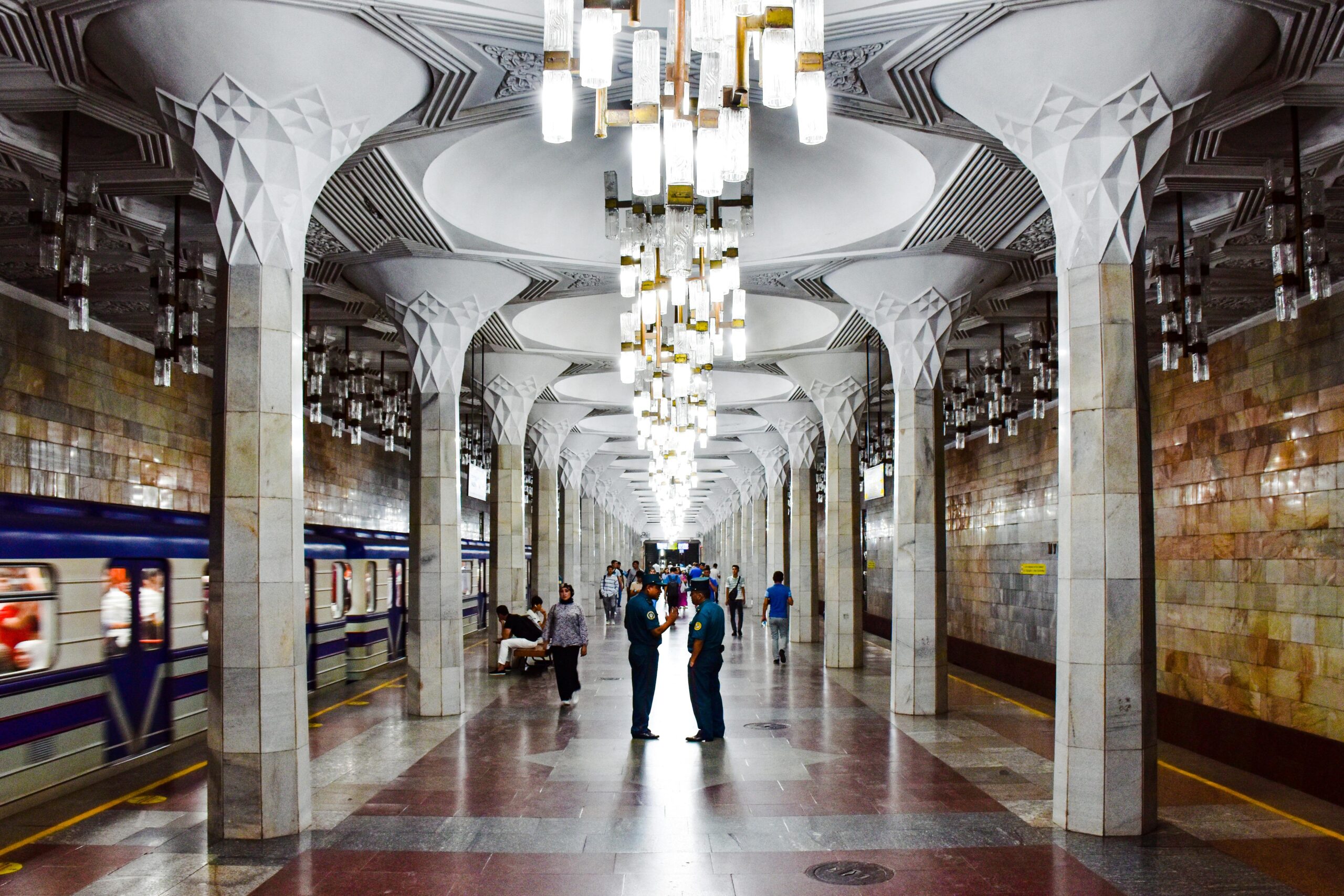
Entering the stations is somewhat similar to airport security, though significantly less soul-draining.
Before entering, your bags go through a scanner, passports are checked alongside your tickets, and security personnel briefly verify your details before letting you through. The process sounds intimidating on paper, but in reality takes only a few minutes. Nobody was aggressive, nobody was shouting, and the entire system felt surprisingly efficient.
I would still recommend arriving at least 30–40 minutes early, especially if it is your first journey and you want enough time to figure out the platforms without stress.
The stations themselves were clean, spacious, and surprisingly easy to navigate. Large digital boards displayed departure information clearly, and even though not everything was in English, the overall layout felt intuitive enough that we rarely struggled to figure out where we needed to go.
The process was also remarkably consistent across every station we used, whether we were travelling from Tashkent to Samarkand, Samarkand to Bukhara, or back again later in the trip. Once you understand the flow the first time, the rest of the journeys become very straightforward.
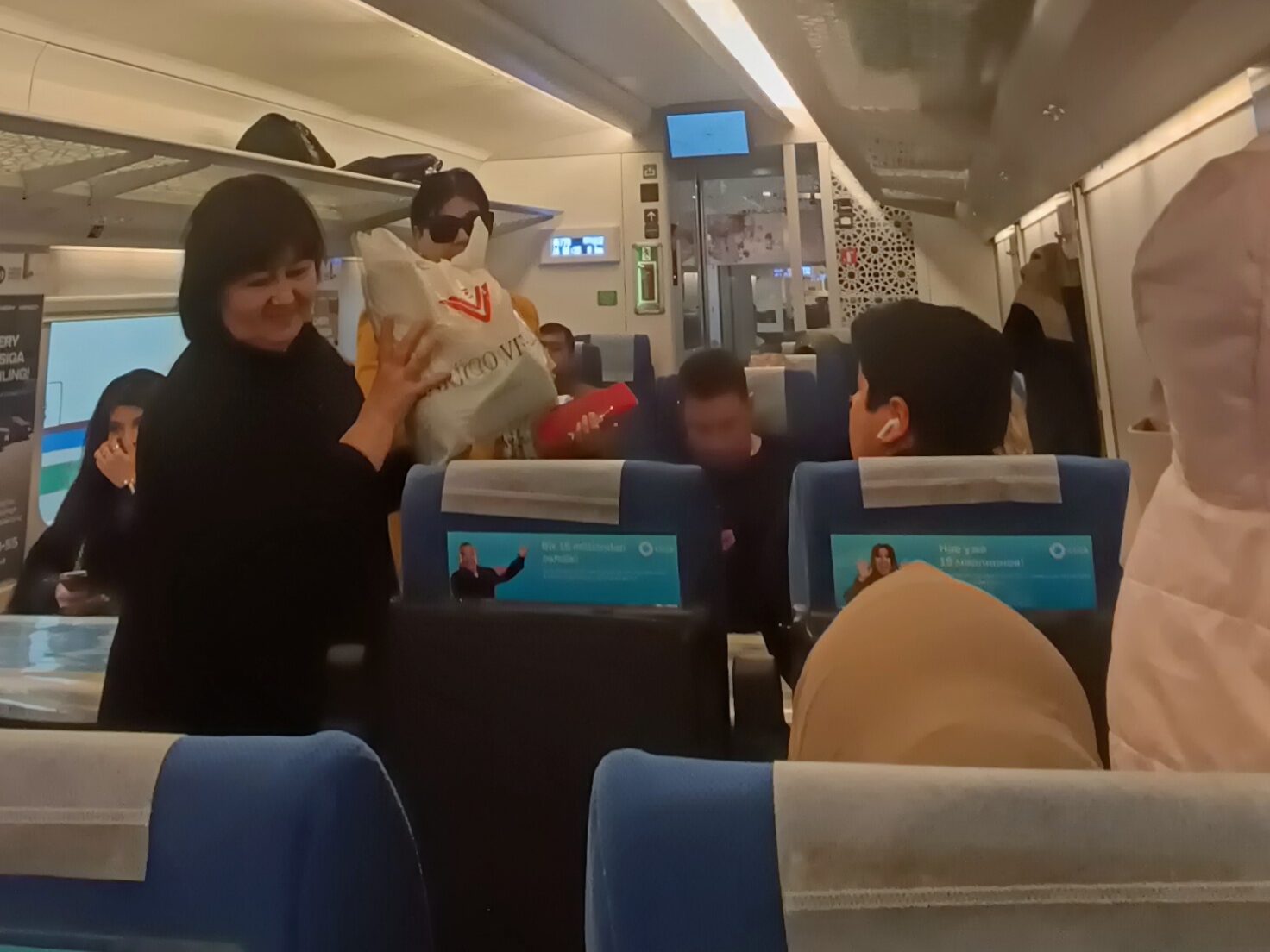
Outside the stations, there were always taxis waiting, and interestingly, the drivers rarely tried to inflate prices for tourists. Out of curiosity, I compared the fares with Yandex Go multiple times and found them to be almost identical in most cases, which honestly felt like a minor miracle by international transport standards.
Several stations also had ATMs either inside or directly outside the terminal buildings, which were extremely useful for withdrawing cash before reaching the old city areas.
Because our train journeys were relatively short, we never really needed meals onboard. However, some classes apparently include complimentary snacks and drinks, and there are usually food and beverage options available for purchase as well.
Most importantly, the stations consistently felt safe and manageable throughout the trip. They were busy without being chaotic, monitored without feeling intimidating, and organised in a way that made independent travel feel far less stressful than I had expected before arriving in Uzbekistan.
What the Afrosiyob Train in Uzbekistan Felt Like
The first thing that struck me after boarding the Afrosiyob train was how genuinely comfortable everything felt.
Not “luxury train experience” comfortable. Nobody was handing out champagne while a violinist played softly in the background. But clean, modern, quiet, and deeply civilised in a way that makes you immediately unclench after a travel morning.
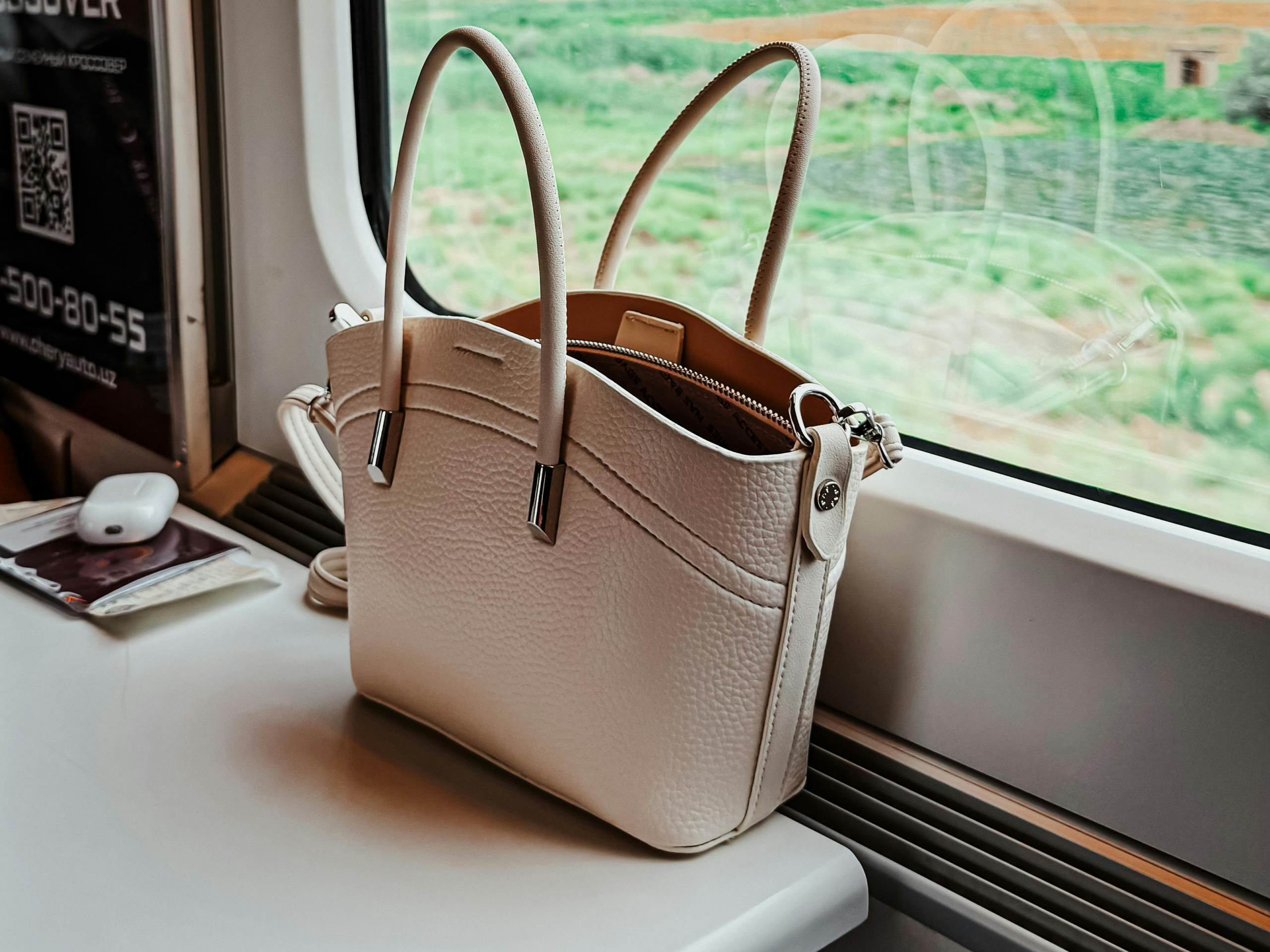
Even in Economy Class, the seats were spacious with plenty of legroom, charging ports, and enough luggage storage without turning boarding into a competitive sport. Larger suitcases are placed in dedicated racks near the carriage doors, while smaller bags fit comfortably in the overhead compartments above the seats.
The ride itself was also incredibly smooth. At several points, we were travelling close to 250 kilometres per hour, but inside the carriage, it barely registered beyond the changing scenery outside the window. Cities slowly disappeared into long stretches of dry plains, scattered villages, and distant mountains under an enormous sky.
There was a calmness onboard that I honestly did not expect. People quietly drank tea, watched videos on their phones, unpacked snacks, or simply stared out the window for long stretches without speaking much. Compared to certain train journeys where everybody seems emotionally one inconvenience away from collapse, the Afrosiyob felt remarkably peaceful.
The air-conditioning was extremely effective, which is a polite way of saying I was unexpectedly grateful for carrying a light jacket despite travelling through the desert.
Announcements were made in Uzbek, Russian, and English, ticket checks were quick and uncomplicated, and overall, the entire experience felt refreshingly low-stress. I had expected Uzbekistan train travel to feel like a logistical necessity. Instead, it quietly became one of my favourite parts of moving through the country.
To Recap: Taking the Afrosiyob Train in Uzbekistan
- Book your tickets as early as possible once your travel dates are fixed, especially during spring and autumn when tourism is at its peak.
- Arrive at the station at least 30–40 minutes before departure so you have enough time for the security checks and platform process without rushing.
- Keep your passport handy. You will need it alongside your ticket before entering the station.
- Screenshot your tickets after booking them. Mobile data usually works fine in the cities, but having an offline copy removes unnecessary stress.
- Carry a light jacket or scarf, even in warmer months. The air-conditioning onboard can get surprisingly enthusiastic.
- Do not panic if the Afrosiyob tickets are sold out. The slower Sharq and passenger trains are still comfortable, affordable, and widely used by locals.
- Economy Class is completely fine for most travellers. Unless you particularly want extra space or additional services, there is no real need to splurge on VIP seats for these relatively short journeys.
Final Thoughts: Should You Do It?
Without hesitation.
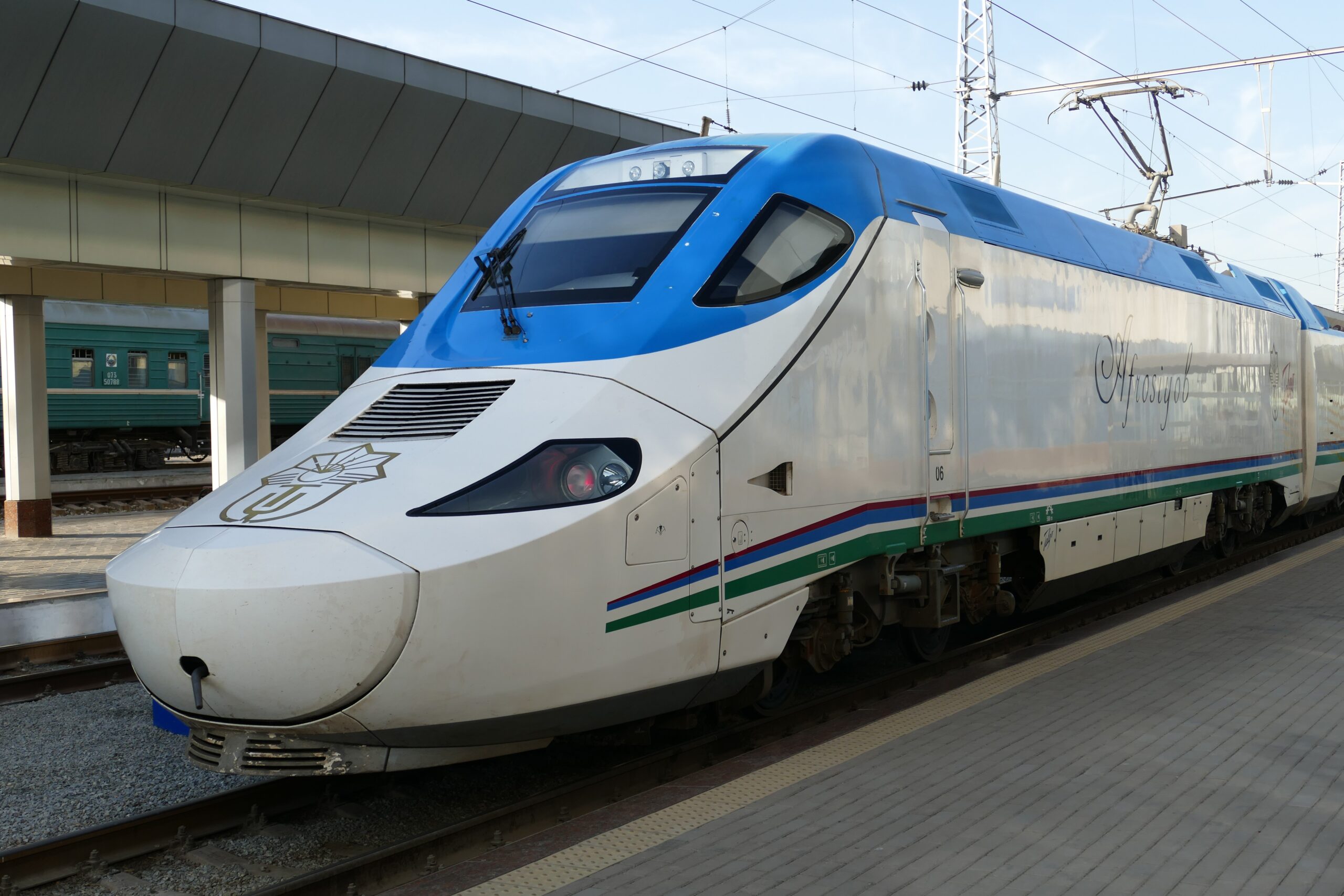
More than anything else, the Afrosiyob trains changed the way Uzbekistan felt as a destination for me. What initially seemed like a slightly intimidating Central Asian itinerary quickly became one of the smoothest independent trips I have taken in years.
The trains are surprisingly easy to navigate, even for first-time visitors. More importantly, they remove a huge amount of the logistical exhaustion that often comes with moving between cities while travelling.
Instead of spending entire days figuring out complicated transport, you board the train, settle into your seat, drink some tea, stare out at the desert for a while, and a few hours later, you arrive directly in the centre of another historic Silk Road city.
So, yes! If you are going to travel within Uzbekistan, take the train and thank me later!
🌿 Planning Your Trip?
If the idea of navigating trains across Central Asia has been living in your head as something complicated or slightly intimidating, Uzbekistan is honestly a very good place to start.
The Afrosiyob ended up becoming one of my favourite parts of travelling through the country. Not because it was luxurious or dramatic, but because it made moving between cities feel calm, straightforward, and strangely peaceful in a way I had not expected before arriving.
I am slowly building a full Uzbekistan collection on the blog, including city guides, budget breakdowns, Silk Road stories, and practical travel tips from my time there.
And if you have questions about routes, booking tickets, or planning Uzbekistan as an independent traveller, feel free to leave a comment below. I am always happy to help if I can.
You can also connect with me on Instagram if that’s easier.
Also, if this post helped you even slightly, sharing it with another curious traveller or leaving a quick comment genuinely helps support this tiny corner of the internet more than you probably realise.