Note: This post contains affiliate links. If you book through them, I may earn a small commission at no extra cost to you. I only recommend things I have personally used or genuinely believe in.
When I arrived in Bukhara Old City, the first thing I noticed was the colour.
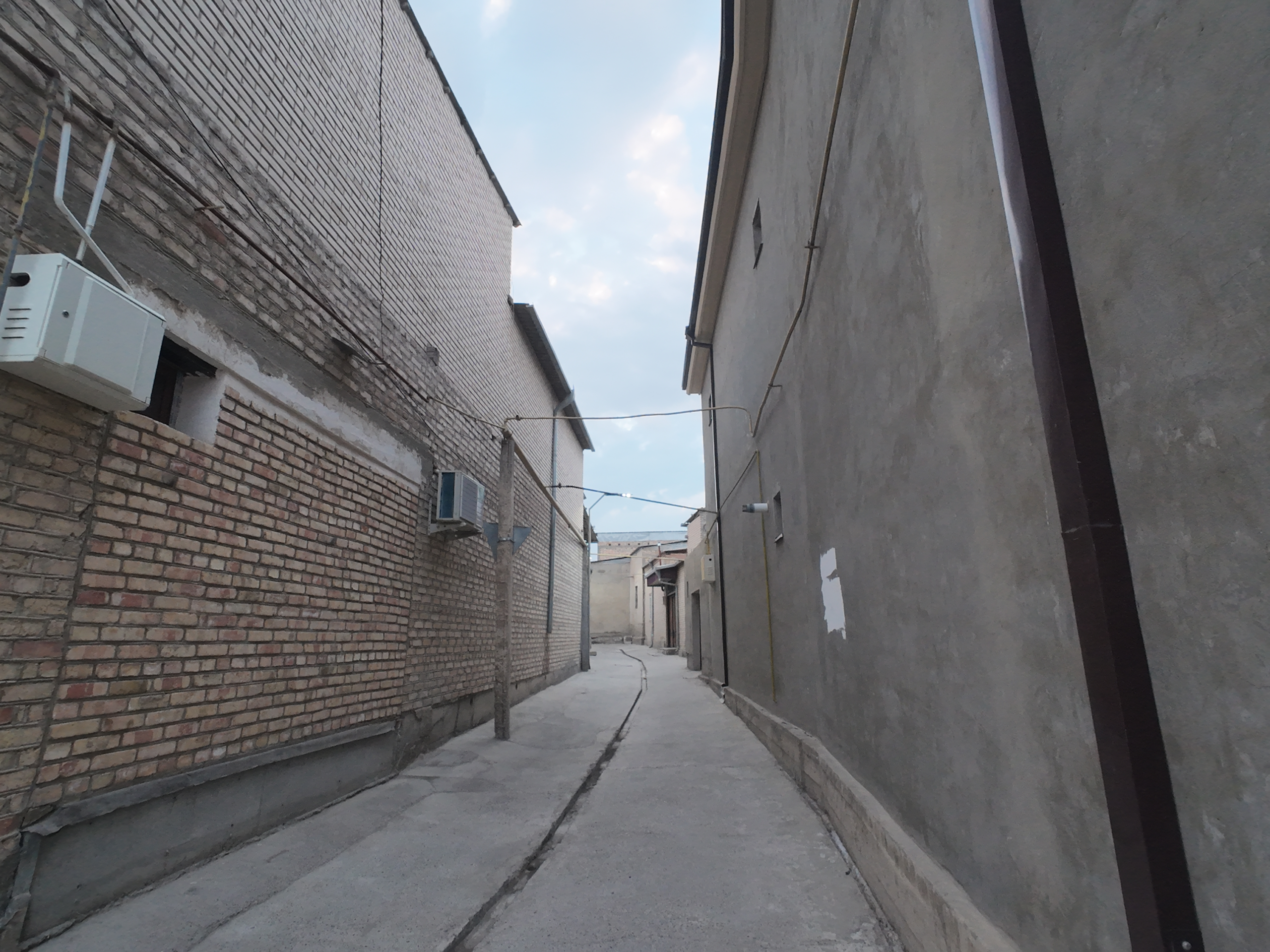
After the turquoise domes and glittering mosaics of Samarkand, Bukhara felt entirely different. The blues gave way to shades of brown I didn’t even know I could find beautiful – clay walls, weathered wooden doors, honey-coloured brick, dusty alleyways, and sandstone glowing softly in the afternoon sun.
Strangely, it reminded me of being a child watching Globe Trekker on the small colour television my grandmother had bought for me. Every week, I would sit glued to the screen as Ian Wright, Justine Shapiro, and the rest of the presenters wandered around places that, to my 10-year-old brain, barely seemed real. I faintly remember wondering where these countries even were and how people actually lived in places that looked so different from anything I knew. The moment that theme music started playing, I was hooked.
Stepping into Bukhara brought all of that rushing back. The colours, the architecture, the feeling of having arrived somewhere completely unfamiliar and yet oddly familiar at the same time. For a brief moment, I felt less like a tourist and more like the star of my own (slightly underfunded) travel documentary.
If you are curious about what it is really like to stay in Bukhara Old City, beyond the monuments, museums, and history lessons, this is my attempt to answer that.
Bukhara Old City: Quick FAQs
How many days do you need in Bukhara?
I recommend at least two full days. Three is ideal if you enjoy slow travel and want enough time to explore the Bukhara Old City without rushing from monument to monument.
Where should I stay in Bukhara?
If possible, stay within the Bukhara Old City. Most major sights, restaurants, tea houses, and guesthouses are within walking distance, which completely changes the experience of the city.
Is staying in Bukhara Old City worth it?
Absolutely. Staying in the Old City means you can explore the historic centre early in the morning and late in the evening after most day visitors have left.
Is Bukhara walkable?
Very. Walking around Bukhara is one of the best parts of visiting the city. Most attractions are clustered together, and the old lanes are often more memorable than the destinations themselves.
How do you get from Samarkand to Bukhara?
The easiest option is the Afrosiyob high-speed train, which takes around 1.5 to 2 hours. I cover the full experience in my Afrosiyob train guide.
Can you visit Bukhara without a tour?
Yes. Bukhara is one of the easiest cities in Uzbekistan to explore independently. The Old City is compact, safe, and straightforward to navigate. However, if you are in a group or a solo traveller who likes meeting other like-minded travellers, group tours could be a very nice idea!
Is Bukhara safe for solo travellers?
In my experience, very much so. The atmosphere is calm, the historic centre is easy to navigate, and I never encountered situations that made me feel uncomfortable.
Is Bukhara a good fit for slow travelers with families or children?
Very much so. The Old City is compact, largely traffic-free, and easy to navigate at whatever pace suits you.
Is Bukhara expensive?
Not at all. Accommodation, food, and sightseeing are generally affordable, especially compared to many historic cities elsewhere. You can read my full Uzbekistan travel budget breakdown for exact costs.
Arriving in Bukhara
We arrived from Samarkand on the Afrosiyob and took a short taxi ride into the Old City.
The colour shift hit me again the moment we stepped out. The bright blues and turquoise domes had largely disappeared, replaced by a palette of earthy tones and more shades of brown than I would have previously considered possible. Dusty brown, honey brown, sandstone brown, sun-baked brown. It felt like somebody had swapped the colour palette overnight.
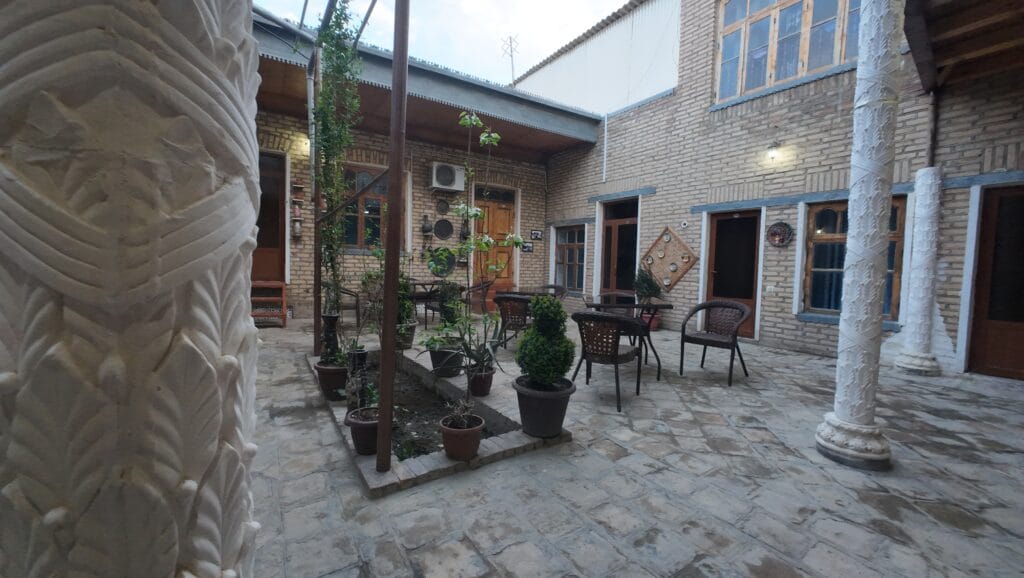
Our guesthouse was hidden behind a large wooden gate inside the old town. From the street, it looked fairly unremarkable. Inside was a quiet courtyard, a few traditionally decorated rooms, and a stillness that makes you put your bags down and exhale.
Over the next couple of days, we spent a surprising amount of time simply walking.
The Old City is compact enough that you can wander without any real purpose and still stumble across a market, a mosque, a tea house, or a small square filled with locals going about their day.
👉 Must read: Riding the World’s Cheapest Bullet Train
Staying in the Heart of Bukhara Old City
If I ever return to Bukhara, I would stay inside the Old City again without a second thought. Part of that is convenience – most of the major sights are within walking distance, and the eateries and shops are always just a few steps away. But convenience is not really the reason.
What I loved most was the atmosphere that came with waking up inside the historic centre itself.
Mornings were quiet in a way that felt earned rather than empty. The occasional shopkeeper sliding open a wooden shutter, a few locals making their way through the alleys, the soft scrape of a broom against ancient cobblestones. We visited in early April when the weather was still cool enough for a jacket, which made the 20,000-step-a-day ‘stroll’ feel even more unhurried.
Many of the guesthouses in the Old City are built around traditional courtyards hidden behind heavy wooden gates. From the street, you would never guess what was inside. Then the door opens and suddenly there are carved pillars, colourful textiles, and a shaded place to sit with tea before heading out for the day.
What also surprised me was how little traffic there was within the Old City itself. Instead of constantly listening for motorbikes or impatient drivers, most of the soundtrack consisted of footsteps, distant conversations, and the occasional azan (call to prayer) drifting across the rooftops.
Evenings were probably my favourite time of day. As the temperature dropped, people emerged for slow walks, outdoor dinners, and long conversations over tea. The old brick buildings took on a warm golden glow and the city settled into a rhythm that felt genuinely unhurried.
👉 Must read: What Uzbekistan Really Cost Me
The Art of Going Nowhere in Bukhara
Most mornings began with breakfast in the courtyard of our guesthouse before we headed out to wander, usually with a rough idea of where we were going but no particularly strict plan. Unlike cities where you feel pressured to rush from one attraction to the next before closing time, Bukhara seemed perfectly content to let us discover it at our own speed.
One afternoon, we found ourselves sitting outside Giotto (it seems to be permanently closed now, according to Google; such a shame if that’s true!), a popular Italian café right at the corner near the Trading Domes, with a view of the whole neighbourhood going about its day. We ordered a pot of cherry tea, which remains one of the best cups of tea I have had anywhere, and settled in to wait for our pizza. Locals were running errands, tourists drifted past with cameras, shopkeepers chatted outside their stores, and the afternoon rolled by without anyone seeming particularly rushed. We weren’t either.

We enjoyed it so much that we came back for our final meal in Bukhara before catching the train back to Tashkent.
If you are looking for a proper sit-down dinner, the Old Bukhara Restaurant is worth booking in advance, especially for evenings. The food is exceptional and the setting, right in the heart of the Old City, does full justice to both. We paid around 100,000 Som per person for a full spread including desserts and a can of beer, which felt like very good value for what it was.
That became the rhythm of Bukhara for us. A bit of walking, a bit of sightseeing, a long tea break, another wander through the old streets, and then an evening spent lingering outdoors as the city cooled down after sunset.
Living Inside a 2,000-Year-Old City
One of the things that surprised me most about Bukhara was how quickly I stopped noticing the monuments.
That sounds strange in a city famous for its mosques, madrasas, minarets, and Silk Road history. But after a couple of days, those things simply became part of the backdrop of daily life. We would wander through the Old City on our way to breakfast and pass buildings older than entire countries without breaking stride. The history stopped being something to observe and started being something we were just moving through.
Toki Zargon, one of the ancient trading domes near the center of the Old City, is a good example of what I mean. The dome itself dates back to the 16th century, built to shelter merchants trading jewellery and precious goods along the Silk Road. Today, jewellery still glitters behind glass counters, silk scarves spill over wooden shelves, and shopkeepers negotiate with the same easy confidence that trade has always required. I picked up some postcards and a few small trinkets, nothing significant, but I stayed far longer than necessary just watching the whole thing happen around me.
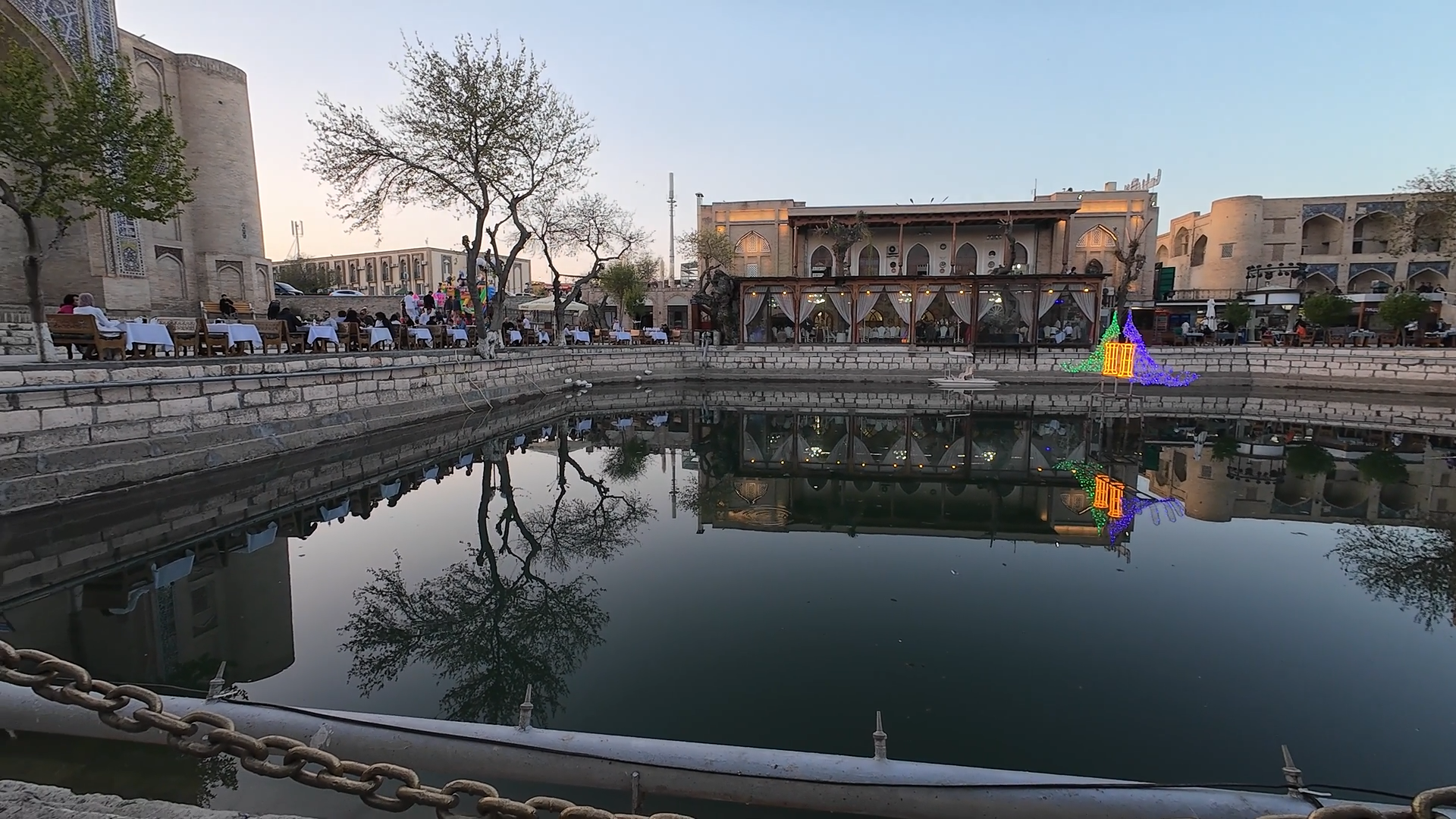
Lyabi-Hauz was where the day slowed down completely. We arrived around sunset, found a spot at one of the tea houses surrounding the pond, and ordered whatever fruit tea was available. At this point, I think nobody does flavored tea better than Uzbekistan – it arrived fragrant and warm and tasted just like a loved one’s warm hug on a cold morning!
Around us, local families were settling in for the evening, travellers were comparing notes, groups of friends were mid-conversation about something that had nothing to do with tourism, and the whole square had that particular late afternoon quality where nobody seemed to be in any hurry to be anywhere else. We weren’t either.
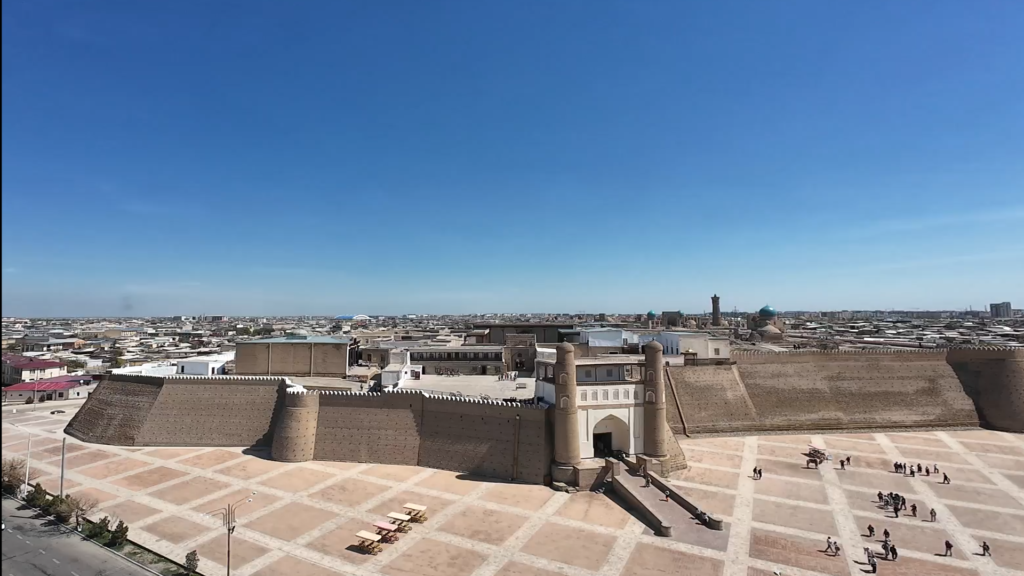
The observation tower located opposite the Ark of Bukhara was a last-minute decision and one of the better ones I made on the trip. For 50,000 Som, you get a bird’s eye view of the entire Old City – domes, courtyards, minarets, winding streets, the Ark itself with people filing in and out below. I watched those people for a while and felt no regret about not joining them. From up there, I could see enough. The scale of it, the density of two thousand years of continuous city life packed into one view, was more than enough. Maybe next time I will go inside the Ark. Not because I missed anything, just because there will be a next time.
Know Before You Go
A few practical things worth knowing before staying in Bukhara Old City:
- Stay inside the Old City if possible. The ability to walk almost everywhere is one of Bukhara’s biggest advantages.
- Bring comfortable walking shoes. The streets are uneven in places and you will probably walk far more than you expect.
- Cash is useful for markets, souvenirs, and smaller cafés. ATMs are easy to find around the city centre. Larger establishments including hotels will often accept USD.
- Download Yandex Go before arriving. It remains the easiest way to book taxis without any fare negotiation.
- Most people speak Uzbek or Russian – English is limited outside hotels and tourist-facing businesses. Download Google Translate offline before you land.
- Dress modestly when visiting mosques and religious sites. Covering shoulders and knees is expected and appreciated.
- Spring (April to June) and autumn (September to early November) offer the most comfortable temperatures for walking. I visited in early April and spent most mornings in a light jacket.
- If you are arriving from Samarkand or Tashkent, the Afrosiyob high-speed train is the easiest and most comfortable way to get here.
So, Bukhara or Samarkand?
One of the questions I kept wondering about, and one I also see people asking a lot when planning a trip to Uzbekistan, is whether to choose Samarkand or Bukhara. My answer is always to do both if you have the time. Although the two cities are only about two hours apart on the Afrosiyob, they feel surprisingly different once you arrive.
Samarkand is the city most people imagine when they think about Uzbekistan. The enormous blue domes, intricate mosaics, grand squares, and larger-than-life Silk Road history feel every bit as impressive in person as they do in photographs. If you want the classic postcard version of Uzbekistan, Samarkand delivers it beautifully.
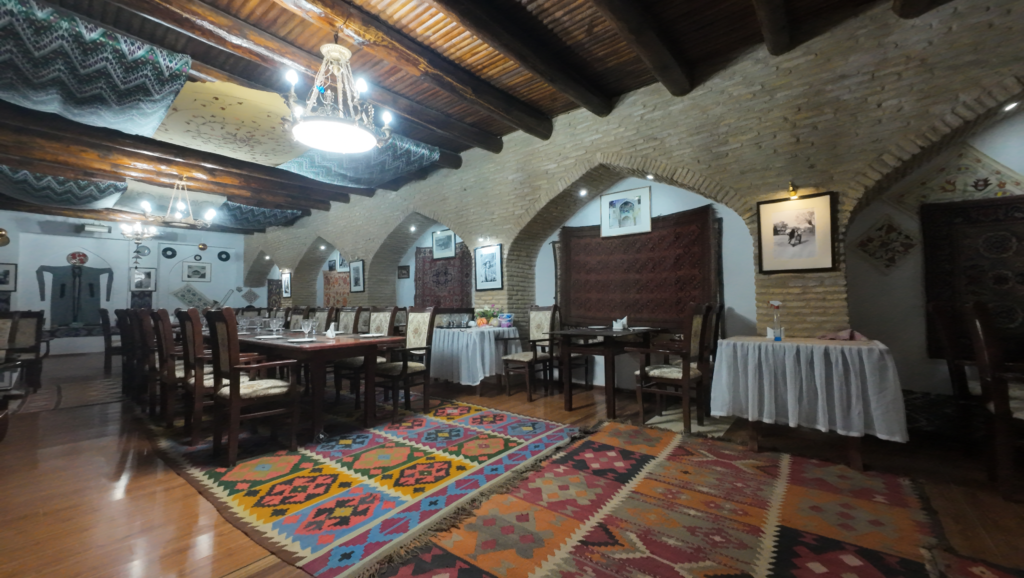
Bukhara offers a different experience. The history is just as rich and the architecture no less fascinating, but the city encourages you to engage with it differently. Rather than rushing between landmarks, I found myself spending more time wandering through old streets, lingering over tea, browsing markets, and simply watching daily life.
For me, the two cities complemented each other perfectly. Samarkand provided the moments of awe. Bukhara provided the space to slow down and absorb everything.
If you are visiting Uzbekistan for the first time, include both. If time only allows for one, the choice comes down to the kind of trip you want.
Choose Samarkand if you are drawn to monumental architecture, iconic Silk Road landmarks, and those moments that make you stop in your tracks.
Choose Bukhara if you enjoy walkable cities, courtyard guesthouses, long tea breaks, and destinations that reveal themselves gradually over a few slow days.
Neither is better than the other. They simply tell different parts of the same story.
👉 Must read: Mosaics and Magic in Samarkand, Uzbekistan
Final Thoughts: Would I Stay in Bukhara Old City Again?
Absolutely.
The longer I spent in Bukhara, the less interested I became in trying to see everything. Instead, I found myself enjoying the simple rhythm of the city – wandering through the Old Town, stopping for tea, browsing the markets, and spending entire afternoons with no real plan beyond seeing where the next alleyway might lead.
Bukhara rewards curiosity more than efficiency. It is a city that finds you, not the other way around. And if your idea of a good trip involves cherry tea at a corner café, sunset at a centuries-old pond, and waking up each morning with nowhere particular to be, you will feel very much at home here.
I would happily come back and spend a few more days doing exactly what I did the first time.
Planning Your Trip?
I am gradually building a collection of Uzbekistan travel guides, budget breakdowns, and honest reflections from my own journey through the country. If you are planning a trip, keep checking this space – there is more coming.
And if you have a question about train travel, accommodation, budgeting, or anything else I have not covered here, feel free to leave a comment below. I am always happy to help fellow travellers figure out the details.
You can also connect with me on Instagram if that’s easier.
Finally, if this post helped you plan your trip or simply gave you a small glimpse into life inside Bukhara’s Old City, consider sharing it with someone who might enjoy travelling a little more slowly.